
What's Happening?
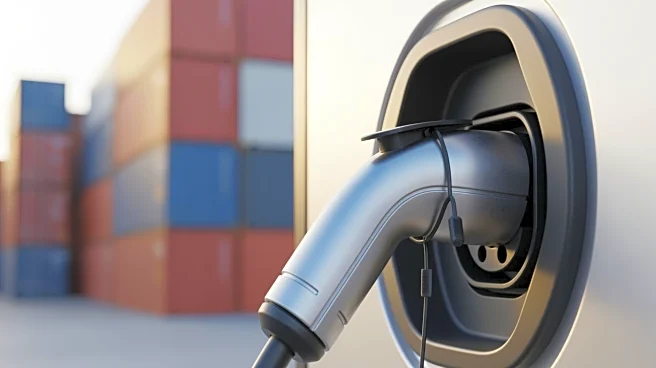
Brazil has concluded a temporary tariff exemption that allowed Chinese-made semi-knocked-down (SKD) and completely knocked-down (CKD) assembly kits for electric and hybrid vehicles to enter the country
at reduced costs. This exemption, valued at up to $463 million in duty-free imports, was not renewed after six months due to lobbying from global automakers represented by Anfavea. The exemption initially reduced import taxes to 18% and 16% for SKD and CKD kits, respectively, but these rates will now return to 35%, aligning with tariffs for fully assembled vehicles. The exemption was initially granted in August 2025 to support BYD's large-scale vehicle production in Brazil. Anfavea, representing brands like Volkswagen, Stellantis, General Motors, and Toyota, argued that the measure favored simple assembly over full manufacturing, potentially weakening Brazil's domestic supply chain.
Why It's Important?
The end of the tariff exemption is significant for Brazil's automotive industry, particularly affecting BYD, which has been a major player in the country's electric vehicle market. BYD, which controls over 74% of Brazil's EV segment, had benefited from the exemption to establish its manufacturing presence. The decision to end the exemption could impact BYD's operations and its goal to become Brazil's largest carmaker by sales volumes by 2030. The move also reflects the influence of established automakers in Brazil, who argued that the exemption could lead to job losses and weaken the domestic supply chain. This decision underscores the tension between fostering new industry entrants and protecting existing domestic industries.
What's Next?
In response to the regulatory changes, BYD is focusing on increasing local parts sourcing or production at its Bahia plant, aiming for 50% by the end of 2026. The company is investing approximately $1.1 billion to enhance regional vertical integration and has acquired mining rights in Brazil's 'lithium valley' to support its operations. BYD's strategic adjustments indicate a shift towards deeper integration into Brazil's economy, potentially mitigating the impact of the tariff changes. Meanwhile, other Chinese automakers like Great Wall and Geely are also expanding their presence in Brazil, suggesting continued competition and growth in the country's EV market.