





What's Happening?
Gold experienced its largest single-day drop since March, driven by a stronger-than-expected U.S. employment report that diminished hopes for a near-term Federal Reserve rate cut. Gold futures fell by $148.00, or 3.30%, settling at $4,353.90, erasing
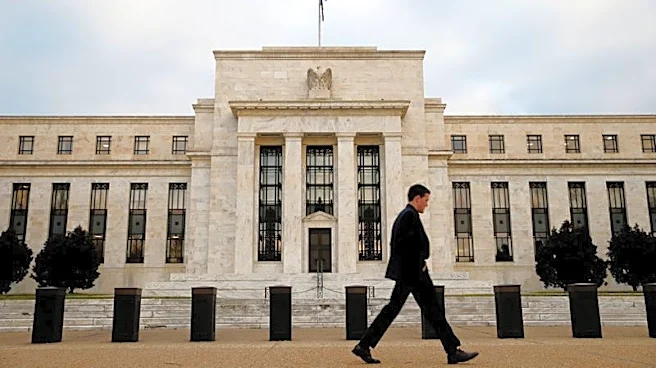
gains made earlier in 2026. The Labor Department's May nonfarm payrolls report revealed the addition of 172,000 jobs, nearly double the forecasted 88,000, with the unemployment rate steady at 4.3%. This data increased the probability that the Federal Open Market Committee will maintain current rates, as indicated by the CME Group's FedWatch tool. The U.S. Dollar Index also rose, making gold more expensive for international buyers.
Why It's Important?
The unexpected strength in the U.S. job market has significant implications for monetary policy and the gold market. The robust employment figures suggest a resilient economy, reducing the likelihood of a rate cut by the Federal Reserve. This has led to a stronger dollar, which typically depresses gold prices as it becomes more costly for foreign investors. The decline in gold prices could impact investors and markets that rely on gold as a hedge against economic uncertainty. Additionally, the technical breach of gold's 200-day moving average may prompt a reassessment by traders and institutions, potentially leading to further market volatility.
What's Next?
Future economic data releases will be crucial in shaping the Federal Reserve's policy decisions. If upcoming reports continue to show economic strength, the Fed may maintain or even increase interest rates, further influencing gold prices and market dynamics. Investors and traders will closely monitor these developments, as well as any shifts in the Fed's policy stance, to adjust their strategies accordingly.