



What's Happening?
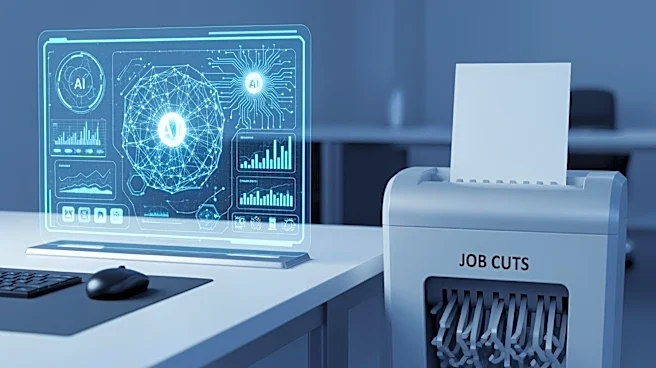
Snap CEO Evan Spiegel announced plans to cut 1,000 jobs, framing the decision as part of a strategic shift towards organizing employees into small, AI-powered teams. This approach, which began last year, aims to enhance productivity by utilizing AI to streamline
tasks and reduce the need for large teams. Similar strategies have been adopted by other major companies, including Atlassian and Meta, where leaders have acknowledged the role of AI in transforming workforce dynamics. The trend reflects a broader movement towards leaner teams and flatter organizational structures, driven by the capabilities of AI technology.
Why It's Important?
The shift towards AI-powered tiny teams represents a significant change in workplace dynamics, with potential implications for employee morale and career progression. While AI can enhance efficiency, reliance on small teams may lead to reduced opportunities for entry-level positions, impacting the talent pipeline. Additionally, the lack of human interaction in decision-making processes could amplify biases and affect business outcomes. Companies embracing this model must balance the benefits of AI with the need to maintain a supportive environment for employee growth and engagement.
What's Next?
As more companies adopt AI-driven team structures, they will need to address challenges related to employee morale and career development. Organizations may need to implement strategies to ensure that AI complements human work rather than replacing it entirely. This could involve redesigning work processes to foster collaboration and mitigate potential biases. Additionally, companies might explore ways to support junior employees in their career progression, ensuring that the shift to tiny teams does not hinder their professional growth.
Beyond the Headlines
The move towards AI-powered teams raises ethical considerations regarding the role of technology in the workplace. As AI becomes more integrated into business operations, companies must navigate the balance between technological efficiency and human-centric work environments. This shift could also influence cultural perceptions of work, as traditional hierarchies give way to flatter structures. The long-term impact on employee satisfaction and organizational culture will be crucial for businesses to consider as they adapt to these changes.