



What's Happening?
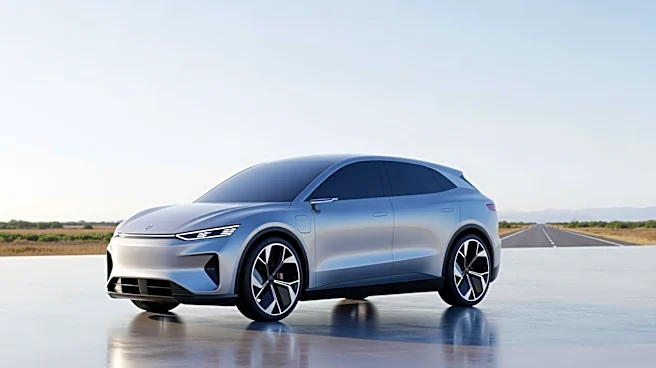
Rivian Automotive has introduced the R1S Tri-Motor, a luxury electric SUV, as part of its lineup of high-end American-made vehicles. Priced at $107,700, the R1S is manufactured in Normal, Illinois, and is noted for its off-road capabilities, on-road speed,
and seven-passenger seating. The vehicle offers over 400 miles of range with its Max battery pack, making it a versatile option for families seeking adventure without compromising on electric efficiency. This development is part of a broader trend in the American automotive industry, which has seen a shift from traditional muscle cars to a diverse array of high-end electric vehicles, luxury SUVs, and performance trucks. This evolution reflects American manufacturers' embrace of electrification, advanced technology, and luxury craftsmanship while maintaining performance credentials.
Why It's Important?
The introduction of the Rivian R1S Tri-Motor underscores a significant transformation in the American automotive industry towards electrification and luxury. This shift is crucial as it positions American manufacturers to compete globally in the high-end vehicle market, traditionally dominated by European and Asian brands. The R1S, with its combination of luxury and performance, exemplifies how American companies are leveraging advanced technology to meet consumer demand for sustainable yet high-performing vehicles. This trend not only enhances the global competitiveness of American automakers but also supports the broader push towards reducing carbon emissions through increased adoption of electric vehicles.
What's Next?
Rivian's focus on luxury electric vehicles like the R1S Tri-Motor is expected to influence other American automakers to expand their electric and luxury offerings. As consumer interest in sustainable transportation grows, manufacturers may increase investments in electric vehicle technology and infrastructure. Additionally, the success of models like the R1S could prompt further innovation in battery technology and vehicle design, potentially leading to more affordable and efficient electric vehicles in the future. Stakeholders, including policymakers and environmental groups, may also advocate for supportive measures to accelerate the transition to electric vehicles.
Beyond the Headlines
The rise of luxury electric vehicles like the Rivian R1S Tri-Motor also raises questions about accessibility and equity in the transition to sustainable transportation. While these vehicles showcase technological advancements, their high price points may limit accessibility for average consumers. This could lead to discussions about the need for policies that support broader access to electric vehicles, such as incentives or subsidies. Additionally, the focus on luxury models highlights the ongoing challenge of balancing innovation with affordability in the electric vehicle market.