
What's Happening?
Prince Harry and Meghan Markle, the Duke and Duchess of Sussex, are facing criticism from neighbors regarding their $29 million mansion in Montecito, California. The couple, who share the home with their children,
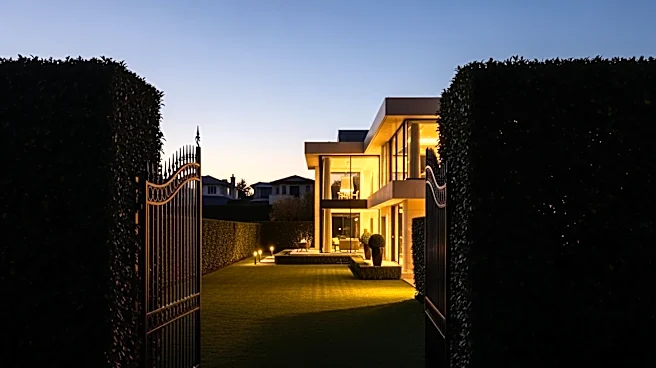
Prince Archie and Princess Lilibet, have been living in what they describe as an idyllic setting. However, according to journalist Tom Sykes, some neighbors view the property as a 'laughing stock' due to its lack of extensive renovations, a common practice among wealthy homeowners in the area. The mansion, originally purchased for $14.65 million, has doubled in value, now estimated at $29 million. Despite the criticism, the couple has chosen to maintain the original design of the house, which aligns with Meghan's lifestyle brand, As Ever. The property features a rustic chateau aesthetic, complete with an outdoor pool, spa room, wine cellar, and more.
Why It's Important?
The criticism of Prince Harry and Meghan Markle's home highlights cultural differences in property ownership and renovation practices between the U.S. and the U.K. In America, it is common for affluent individuals to extensively remodel or rebuild properties to suit personal tastes, whereas in the U.K., there is often a focus on preserving historical features. The couple's decision to retain the original design of their home may reflect a strategic financial choice, given their current financial independence from the royal family. This situation underscores the challenges faced by public figures in balancing personal preferences with public expectations, particularly in high-profile communities.
What's Next?
It remains to be seen how Prince Harry and Meghan Markle will respond to the ongoing criticism from their neighbors. The couple may choose to address these concerns publicly or continue to focus on their personal and professional endeavors. As they navigate their new life in the U.S., their decisions regarding property management and public relations will likely continue to attract media attention. Additionally, the increasing value of their property could influence future real estate decisions, potentially impacting their financial strategy.