



What's Happening?
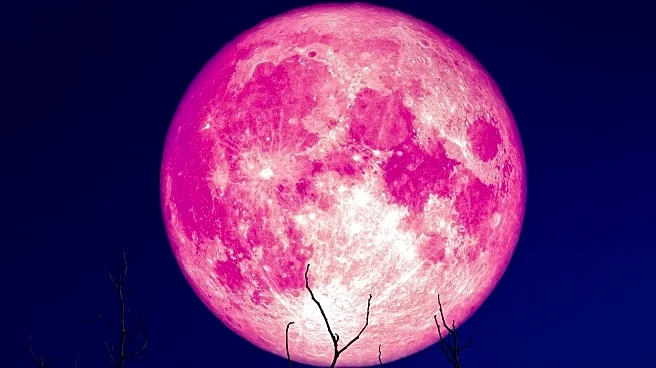
The Pink Moon, a full moon event, will occur on April 1, 2026, reaching its peak brightness at 10:12 PM EDT. This celestial event, named after the early spring bloom of the pink wildflower Phlox subulata, will be visible across various global locations,
including New York, London, and Tokyo. Despite its name, the Pink Moon does not appear pink but is a traditional name linked to seasonal changes. The moon will rise near the eastern horizon around sunset and remain visible throughout the night, offering a striking visual experience due to the moon illusion, which makes it appear larger near the horizon.
Why It's Important?
The Pink Moon is significant as it marks the first full moon after the March equinox, known as the Paschal Full Moon, which determines the date of Easter. This event is not only a visual spectacle but also holds cultural and historical importance, symbolizing renewal and the arrival of spring. For skywatchers and astronomy enthusiasts, it provides an opportunity to engage with the night sky and appreciate the natural cycles of the moon. The event also encourages public interest in astronomy and can serve as an educational moment for understanding lunar phases and their cultural significance.
What's Next?
Following the Pink Moon, April will feature several other celestial events, including meteor showers and planetary alignments, offering more opportunities for stargazing. Observers are encouraged to find unobstructed viewing locations to fully appreciate these events. The Pink Moon sets the stage for a month of astronomical activities, inviting enthusiasts to explore the night sky further and deepen their understanding of celestial phenomena.