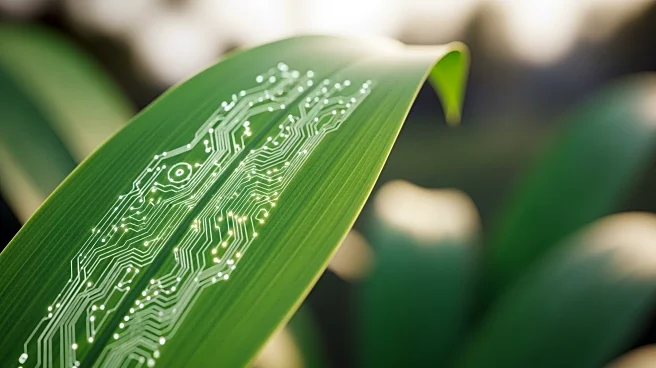

What's Happening?
The synthetic biology sector within agriculture is experiencing rapid growth, with market valuation expected to rise from $7.28 billion in 2024 to $9.30 billion by 2025. This growth is driven by the demand
for sustainable agricultural practices, bio-based fertilizers, and pest-resistant crops. The sector is projected to reach $24.48 billion by 2029, supported by advancements in gene-editing, soil microbiome engineering, and synthetic seed coatings. Government incentives and public-private partnerships are also fueling this expansion.
Why It's Important?
The growth of synthetic biology in agriculture is crucial for addressing global food security challenges and reducing the environmental impact of farming. By developing crops that are more resilient to climate change and require fewer chemical inputs, the sector supports sustainable agriculture and reduces greenhouse gas emissions. This shift towards eco-friendly practices aligns with global efforts to combat climate change and ensure a stable food supply for a growing population.
What's Next?
The sector is expected to see continued innovation in gene-editing and biofoundry platforms, enhancing crop traits and pest resistance. Increased investment in biotechnology research and development will likely lead to new products and solutions for sustainable agriculture. As consumer demand for organic and eco-friendly food products grows, the market will continue to expand, with significant opportunities for companies involved in agricultural biotechnology.