

What's Happening?
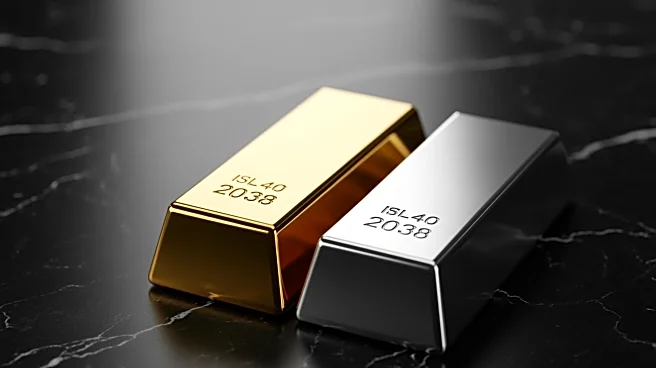
Silver prices have reached an unprecedented $100 per ounce, while gold is approaching the $5,000 mark. This surge in precious metals is attributed to several factors, including investor concerns over currency debasement, rising government debt, geopolitical uncertainties, and increased market volatility. Central banks have also been purchasing gold as a reserve asset, reversing a trend of selling in previous years. The rally in precious metals is not limited to silver and gold, as other metals like platinum, palladium, and rhodium have also seen price increases. The current market conditions suggest a potential for a short-term correction, but long-term investors may find the underlying factors driving these price increases to be sustainable.
Why It's Important?
The significant rise in precious metal prices reflects broader economic and geopolitical concerns. Investors are seeking safe-haven assets to protect against potential currency devaluation and economic instability. The increase in government debt and aggressive fiscal policies have heightened these concerns, prompting a shift towards tangible assets like gold and silver. This trend could impact various sectors, including mining and investment, as demand for these metals continues to grow. Additionally, the actions of central banks in accumulating gold reserves indicate a strategic move to safeguard against future economic uncertainties.
What's Next?
The current trajectory of precious metal prices suggests that investors and traders should be cautious of potential market corrections. However, the long-term outlook remains positive for those seeking to hedge against economic risks. The ongoing geopolitical tensions and economic policies will likely continue to influence market dynamics. Stakeholders in the mining industry and financial markets will need to monitor these developments closely to capitalize on emerging opportunities and mitigate risks associated with price volatility.
Beyond the Headlines
The surge in precious metal prices highlights the complex interplay between economic policies, geopolitical events, and market sentiment. It underscores the importance of strategic asset allocation in uncertain times. The shift towards gold and silver as reserve assets by central banks may signal a broader reevaluation of monetary policies and reserve management strategies. This development could lead to long-term shifts in global financial markets and influence future economic policy decisions.