







What's Happening?
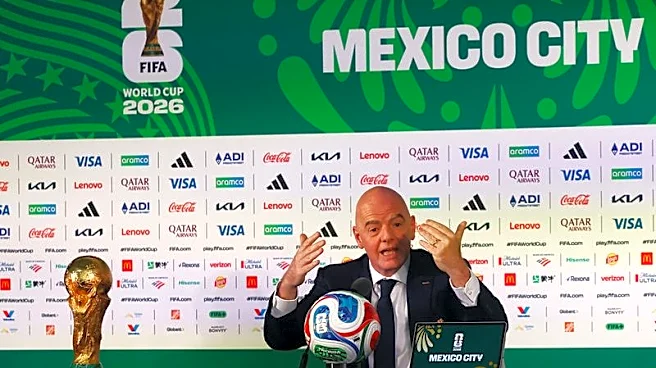
The 2026 World Cup, set to be hosted by the United States, Canada, and Mexico, will take place from June 11 to July 19. The tournament will feature 48 teams, divided into 12 groups of four. The United States, as one of the host nations, has automatically
qualified and is placed in Group D, where it will face Paraguay, Australia, and Türkiye. The opening match will be hosted by Mexico, with the first game between Mexico and South Africa at Estadio Azteca in Mexico City. The tournament will see a total of 32 teams advancing to the knockout stage, including the top two teams from each group and the eight best third-place teams. The schedule includes matches across various cities in the U.S., Canada, and Mexico, with the final set to be held at MetLife Stadium in New Jersey.
Why It's Important?
The 2026 World Cup is significant as it marks the first time the tournament will be hosted by three countries, expanding the global reach and logistical complexity of the event. For the United States, hosting the World Cup presents an opportunity to showcase its infrastructure and hospitality on a global stage, potentially boosting tourism and local economies. The expanded format, with 48 teams, allows more nations to participate, increasing the tournament's inclusivity and global appeal. This event is expected to have a substantial economic impact, with increased spending in host cities and potential long-term benefits from improved sports facilities and international exposure.
What's Next?
As the tournament approaches, preparations in the host cities will intensify, focusing on infrastructure, security, and hospitality to accommodate the influx of international visitors. FIFA and local organizing committees will continue to coordinate logistics, including ticket sales, transportation, and accommodations. Teams will begin their preparations, with national squads finalizing their rosters and strategies. The event will also prompt discussions on the future of international soccer tournaments, particularly regarding the feasibility and benefits of multi-nation hosting and expanded team participation.