


What's Happening?
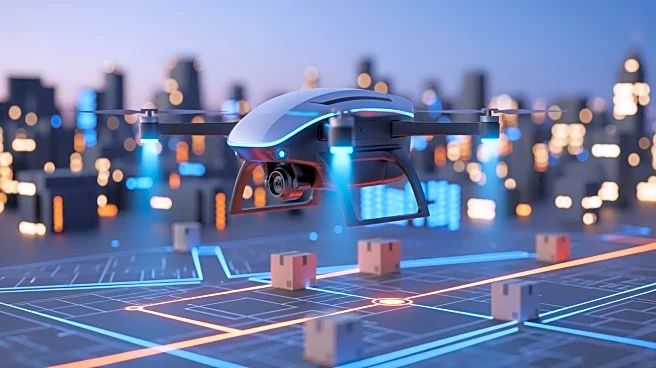
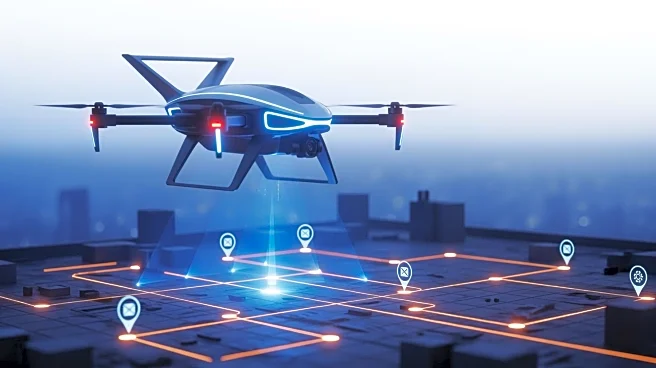
The logistics industry in the United States is undergoing significant transformation with the advent of new technologies aimed at optimizing last-mile delivery. Companies are increasingly adopting drones, autonomous vehicles, and AI-driven routing software to enhance delivery efficiency and reduce costs. FarEye, a provider of last-mile delivery technology, highlights the importance of intelligent routing and real-time data integration to improve delivery operations. The last mile, which can account for over half of total shipping expenses, is becoming a critical area for innovation. Companies like Udelv and Matternet are pioneering the use of autonomous delivery vehicles and drones, respectively, to streamline operations. These technologies are not
only reshaping how goods are delivered but also how companies can differentiate themselves in a competitive market.
Why It's Important?
The shift towards innovative last-mile delivery solutions is crucial for the U.S. logistics sector, as it addresses the growing demand for faster and more reliable delivery services. With e-commerce continuing to rise, efficient last-mile delivery is becoming a key differentiator for businesses. The integration of AI and autonomous technologies can significantly reduce operational costs and improve customer satisfaction by ensuring timely deliveries. Moreover, these advancements have the potential to reshape urban logistics, reduce traffic congestion, and lower carbon emissions by optimizing delivery routes and utilizing electric vehicles. Companies that successfully implement these technologies stand to gain a competitive edge, increase customer loyalty, and enhance their market position.
What's Next?
As these technologies continue to evolve, regulatory frameworks will need to adapt to accommodate new delivery methods, such as drones and autonomous vehicles. The Federal Aviation Administration (FAA) is already proposing rules for Beyond Visual Line of Sight (BVLOS) drone operations, which could accelerate the adoption of drone deliveries. Companies will need to navigate these regulatory landscapes while continuing to innovate and refine their technologies. The development of secure and efficient delivery networks, including smart parcel lockers and integrated logistics systems, will be essential for scaling these solutions. As the industry progresses, collaboration between technology providers, logistics companies, and regulatory bodies will be key to overcoming challenges and realizing the full potential of these innovations.