





What's Happening?
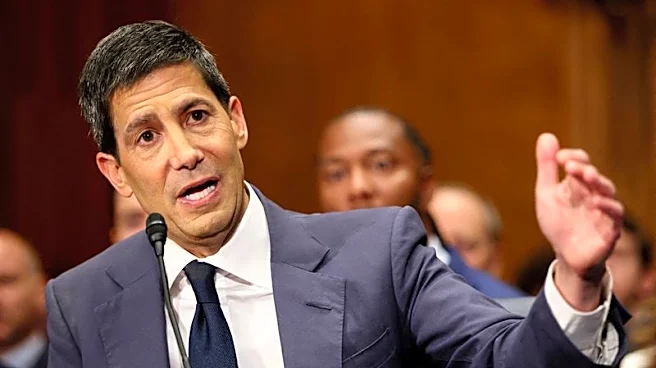
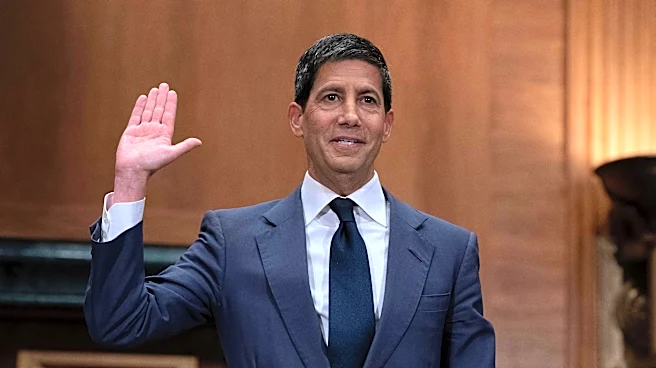
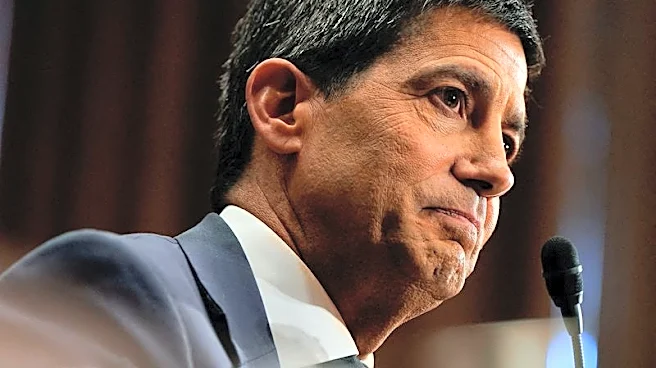
The U.S. Senate has confirmed Kevin Warsh as the new chairman of the Federal Reserve, succeeding Jerome Powell. The confirmation vote, which took place on Wednesday, was notably partisan, with a 54-45 outcome. Warsh, nominated by President Trump, is set
to become the 17th chair of the central bank. His nomination has been controversial, with concerns about his independence from President Trump, who has been critical of the Federal Reserve's previous chair, Jerome Powell, for not lowering interest rates as desired by the administration. Warsh has pledged to be an 'independent actor' while also promising a 'regime change' at the central bank. He is noted for being the wealthiest nominee for the position, with a net worth exceeding $100 million, and has committed to divesting a significant portion of his assets.
Why It's Important?
The confirmation of Kevin Warsh as the Federal Reserve chair is significant due to the potential shift in monetary policy direction under his leadership. Warsh's promise of a 'regime change' could signal a departure from the policies of his predecessor, Jerome Powell, which may impact interest rates and economic strategies. This change comes at a time when the U.S. economy is facing challenges such as persistent inflation and a resilient labor market. The Federal Reserve's decisions on interest rates are crucial for economic stakeholders, including businesses, investors, and consumers, as they influence borrowing costs and economic growth. Warsh's close ties to President Trump have raised concerns about the central bank's independence, a cornerstone of its credibility and effectiveness.
What's Next?
As Warsh assumes his role, the Federal Reserve's approach to interest rates and economic policy will be closely monitored. His leadership could lead to changes in how the central bank addresses inflation and economic growth. Stakeholders, including political leaders and financial markets, will be attentive to any shifts in policy direction. Warsh's commitment to divesting his assets and resigning from certain positions will also be scrutinized to ensure compliance with ethical standards. The broader implications of his leadership will unfold as he begins to implement his vision for the Federal Reserve.