



What's Happening?
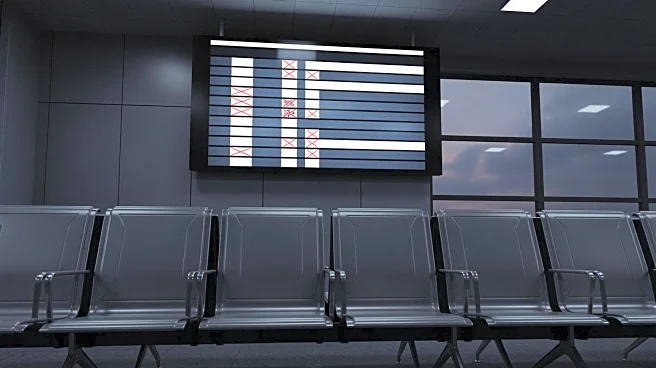
Airline and travel stocks experienced a significant decline as airspace closures in the Middle East forced carriers to cancel thousands of flights. This disruption affected travel plans globally, including destinations as far as Brazil and the Philippines.
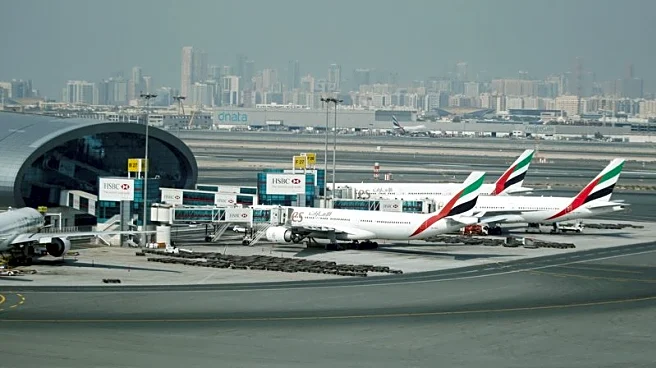
The conflict has also led to a rise in oil prices, further impacting airlines' operational costs. United Airlines, with substantial international exposure, halted its profitable route to Tel Aviv and paused flights to Dubai. Other major U.S. carriers like American Airlines and Delta Air Lines also saw their stocks fall. The International Air Transport Association reported a 5.9% increase in international air travel demand in January, contrasting with the current downturn.
Why It's Important?
The ongoing conflict in the Middle East poses a significant threat to the global airline industry, which is already grappling with rising fuel costs and operational disruptions. The cancellation of flights and the closure of key airspace routes could lead to substantial financial losses for airlines, particularly those with extensive international operations. The increase in oil prices adds to the financial strain, potentially leading to higher ticket prices and reduced consumer demand. This situation underscores the vulnerability of the airline industry to geopolitical tensions and highlights the broader economic implications of regional conflicts.
What's Next?
Airlines are likely to continue monitoring the situation closely, with potential adjustments to flight schedules and routes depending on the conflict's progression. The industry may also see increased lobbying for government support or intervention to mitigate financial losses. Additionally, airlines might explore alternative routes or partnerships to maintain service continuity. The conflict's resolution or escalation will significantly influence the industry's recovery timeline and strategic planning.