





What's Happening?
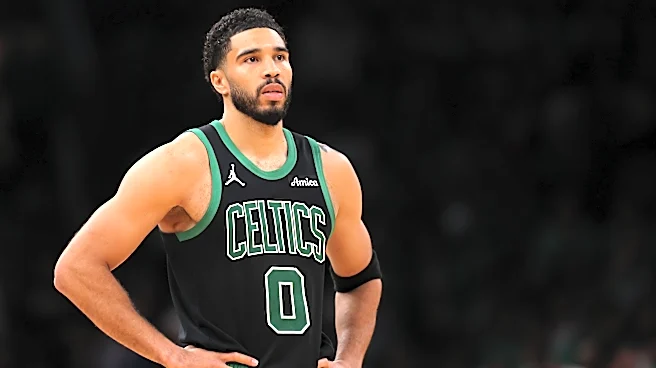
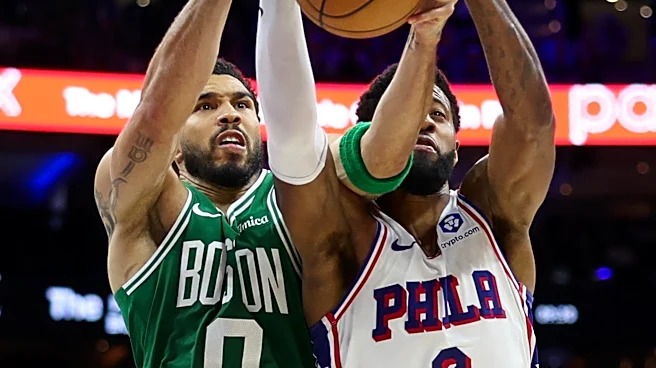
The Boston Celtics experienced a surprising first-round exit from the NBA playoffs, losing to the Philadelphia 76ers in a dramatic Game 7. This defeat marks a significant moment in the NBA, highlighting the shrinking gap between top and lower-seeded teams.
The Celtics, who had a strong regular season despite challenges, were expected to advance further. However, injuries and the competitive nature of the playoffs led to their early exit. The 76ers, considered an unconventional seventh seed due to their talent, capitalized on the Celtics' vulnerabilities. This first round of the playoffs was marked by unpredictability, with several series extending to six or seven games, showcasing the league's increasing parity.
Why It's Important?
The Celtics' early exit underscores a broader trend in the NBA where the difference in talent between top and lower-seeded teams is narrowing. This parity is reshaping the competitive landscape, making the playoffs more unpredictable and exciting for fans. It also challenges traditional powerhouses to adapt and innovate to maintain their dominance. For the Celtics, this loss prompts a reevaluation of their strategy and roster, especially considering the injuries that impacted their performance. The trend of parity could lead to more dynamic and competitive seasons, influencing team management decisions and player movements across the league.
What's Next?
The Celtics face an offseason filled with questions about their future direction. Key decisions will need to be made regarding player health, roster adjustments, and strategic planning to ensure they remain competitive in an increasingly balanced league. The outcome of this playoff season may also influence other teams to reassess their strategies, potentially leading to significant trades and shifts in team dynamics. As the playoffs continue, the focus will be on how remaining teams leverage this parity to their advantage, with the potential for more unexpected outcomes.
Beyond the Headlines
The increasing parity in the NBA could have long-term implications for the league's structure and fan engagement. As more teams become competitive, the traditional dominance of a few franchises may diminish, leading to a more diverse and engaging league. This could also impact broadcasting and sponsorship deals, as a wider range of teams attract attention and viewership. Additionally, the emphasis on team depth and resilience may shift how teams approach player development and scouting, prioritizing versatility and adaptability.