



What's Happening?
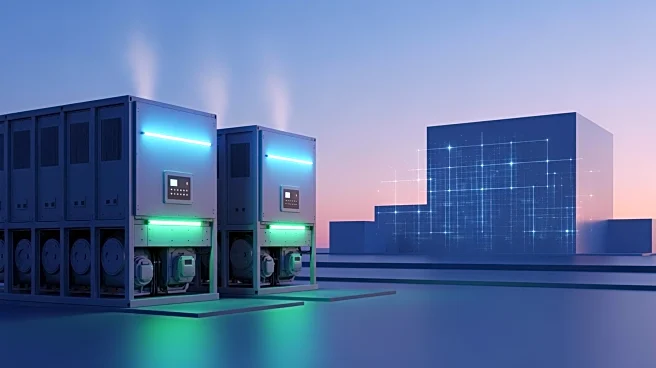
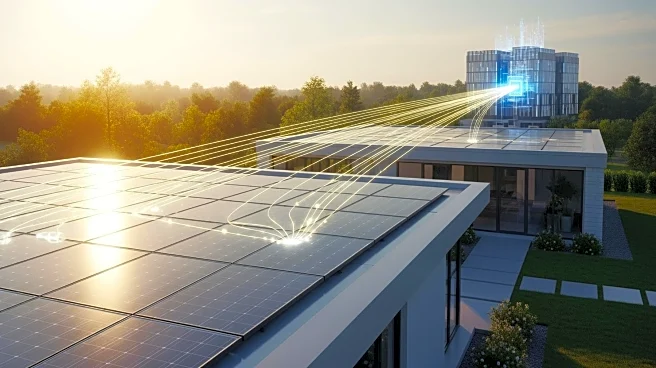
Tech companies are increasingly turning to residential homes as a source of energy to power their data centers. This approach involves using distributed or virtual power plants (VPPs), which coordinate thousands of homes equipped with smart appliances
and home batteries to provide electricity to the grid. This method is seen as a solution to the growing energy demands of data centers, which are expected to require 60 to 100 gigawatts of power by the early 2030s. Companies like Google are already investing in VPPs, with plans to fund small utility-owned batteries for homes in Minnesota. This initiative is part of a broader trend where tech giants are expected to invest approximately $2.7 trillion in data centers and AI infrastructure in the U.S. by 2030.
Why It's Important?
The shift towards using residential energy solutions for powering data centers is significant as it addresses the increasing electricity demands of the tech industry while potentially reducing residential electricity prices. By investing in VPPs, tech companies can help stabilize the grid and provide a more sustainable energy solution. This approach also offers financial benefits to homeowners, who can see reduced electricity rates and gain from the installation of home batteries. Moreover, this strategy aligns with broader efforts to transition to clean energy and reduce reliance on traditional power plants, which can be more costly and environmentally damaging.
What's Next?
As the demand for data center power continues to grow, more tech companies are likely to invest in VPPs and similar energy solutions. This could lead to increased collaboration between tech firms and utility companies, as well as further legislative actions to encourage or mandate such investments. States like New York and Illinois are already considering bills that would require data center developers to offset their energy demands through household electrification and efficiency measures. The success of these initiatives could set a precedent for other regions and industries to follow.