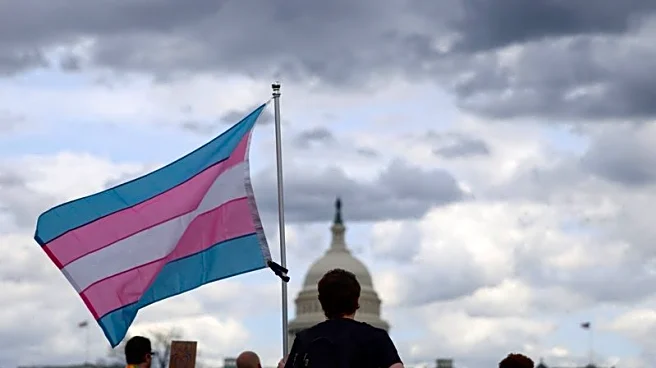




What's Happening?
The International Olympic Committee (IOC) has announced a ban on transgender women competing in women's events, citing concerns over fairness. However, critics argue that the decision lacks scientific backing and is based on fear and misinformation. The policy
has sparked controversy, with experts highlighting that the number of transgender athletes is minuscule and does not pose a threat to women's sports. The ban has been criticized for potentially discriminating against women with intersex conditions and for mandating genetic testing, which is illegal in some countries. The decision has raised ethical and human rights concerns, with calls for a more inclusive approach.
Why It's Important?
The IOC's decision to ban transgender women from competing in women's events has significant implications for the rights and inclusion of transgender and intersex athletes. The policy has been criticized for perpetuating discrimination and failing to consider the complexities of gender identity and biological diversity. The decision could set a precedent for other sports organizations, potentially leading to broader exclusion of transgender athletes. The controversy highlights the need for policies that are informed by science and that respect the rights of all athletes, regardless of gender identity. The debate also underscores the importance of fostering inclusivity and diversity in sports.
What's Next?
The IOC's decision is likely to face legal and ethical challenges, as stakeholders call for a review of the policy. Advocacy groups and human rights organizations may push for more inclusive guidelines that recognize the rights of transgender and intersex athletes. The controversy could prompt broader discussions about gender and inclusion in sports, leading to potential reforms in how sports organizations address these issues. The IOC and other sports bodies may need to engage with experts and affected communities to develop policies that are fair, inclusive, and scientifically sound.