








What's Happening?
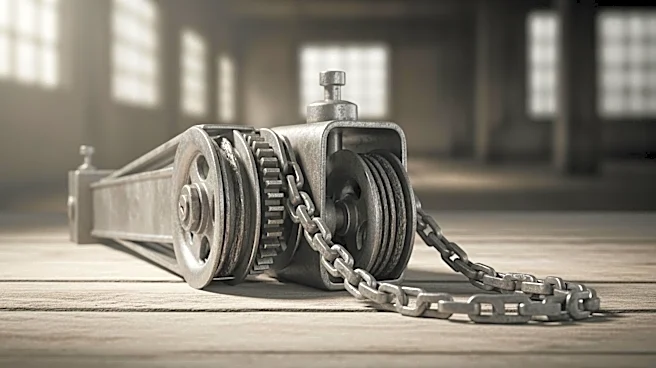
Danish trailer and spider lift manufacturer Omme Lift A/S has filed for insolvency after 120 years of operation. The company, which began as a blacksmith shop in Sønder Omme, central Jutland, transitioned to manufacturing agricultural machinery in 1945
and later added aerial work platforms in 1983. Despite efforts to secure new investment, Omme Lift reported a loss of DK11.7 million (€1.56 million) in its latest financial statement. The company has been simplifying its structure by dissolving three subsidiary companies following mergers. The current CEO, Lars Omme, who took over in 2024, has resigned, citing liquidity challenges as a major obstacle to the company's growth and sustainability.
Why It's Important?
The insolvency of Omme Lift highlights the challenges faced by long-standing manufacturing companies in adapting to modern economic pressures. The loss of such a historic company could impact the local economy in central Jutland, where it has been a significant employer. Additionally, the aerial work platform industry may experience shifts as competitors potentially absorb Omme Lift's market share. The situation underscores the importance of financial agility and the ability to attract investment in maintaining business operations, especially in traditional manufacturing sectors.
What's Next?
With the filing for insolvency, Omme Lift's future remains uncertain. The company may undergo restructuring or liquidation, depending on the decisions made by the insolvency administrators. Stakeholders, including employees, suppliers, and customers, will be closely monitoring developments. Potential buyers or investors might emerge to acquire parts of the business or its assets, which could lead to a revival under new management. The broader industry will be watching for any ripple effects on market dynamics and competition.
Beyond the Headlines
The closure of Omme Lift raises questions about the sustainability of family-run businesses in the modern economy. As the company transitions away from its founding family, it reflects broader trends of professional management taking precedence over traditional family leadership. This shift may influence how similar companies approach succession planning and strategic growth. Additionally, the insolvency highlights the need for innovation and adaptation in manufacturing to meet evolving market demands and financial challenges.