
What's Happening?
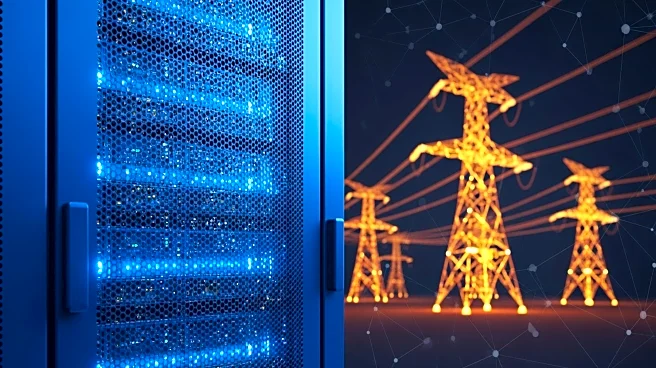
The rapid expansion of hyperscale data centers is creating a mismatch between their electricity demands and the existing power grid infrastructure. Stephen Empedocles, CEO of Clark Street Associates, highlights
that the assumption of data centers as flexible grid assets is flawed. These centers require firm generation and transmission capacity, which current infrastructure struggles to provide. The U.S. risks falling behind in AI leadership due to these challenges, as countries like China advance more aggressively in grid capacity.
Why It's Important?
Data centers are critical to the digital economy, and their power demands are reshaping grid planning and supply chains. The inability to meet these demands could hinder technological advancements and economic growth. Addressing these challenges requires significant investment in grid modernization, including advanced conductor technologies and new generation projects. The U.S. must adapt its approach to federal funding and infrastructure development to maintain competitiveness in the global tech landscape.
What's Next?
Federal funding in 2026 is expected to focus on large, centralized grid infrastructure projects. Utilities will need to prioritize upgrading existing systems and exploring technologies that reduce data center power intensity. The U.S. must also expand its focus on critical minerals beyond rare earths to secure supply chains. Companies seeking federal support will need to navigate a new landscape of government engagement, leveraging a range of tools beyond traditional funding channels.