


What's Happening?
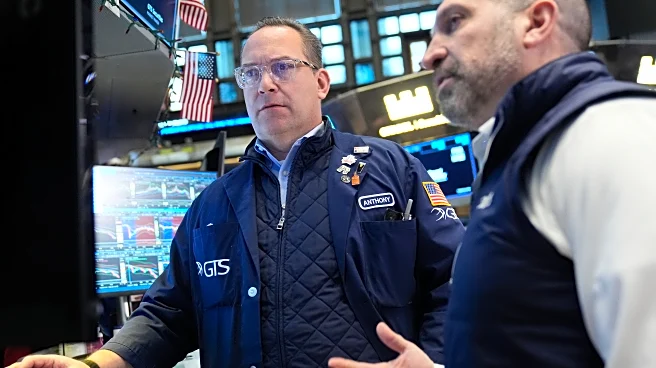
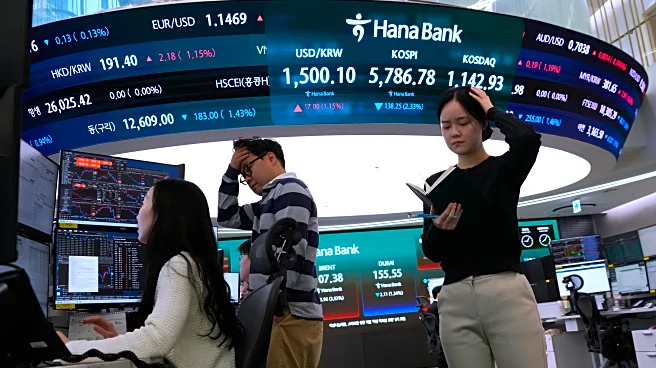
Wall Street experienced a significant downturn as the Dow Jones Industrial Average fell to a new low for 2026, closing below its 200-day moving average. The S&P 500 and Nasdaq Composite also saw declines of 1.4% and 1.5%, respectively. This drop followed
a report indicating higher-than-expected producer prices and increased inflation expectations from the Federal Reserve. The ongoing conflict in Iran and rising oil prices further contributed to the negative market sentiment. Brent crude futures surged by 5.8%, reaching $113.54 per barrel, while West Texas Intermediate crude futures rose to $96.90 per barrel.
Why It's Important?
The decline in Wall Street indices highlights growing concerns about inflation and its potential impact on the U.S. economy. The combination of rising producer prices and inflation expectations suggests that the economy may face stagflation, characterized by slow growth and high inflation. The conflict in Iran exacerbates these fears by driving up oil prices, which can further strain economic conditions. Investors are closely monitoring these developments, as prolonged inflation and geopolitical tensions could lead to more significant economic challenges.
What's Next?
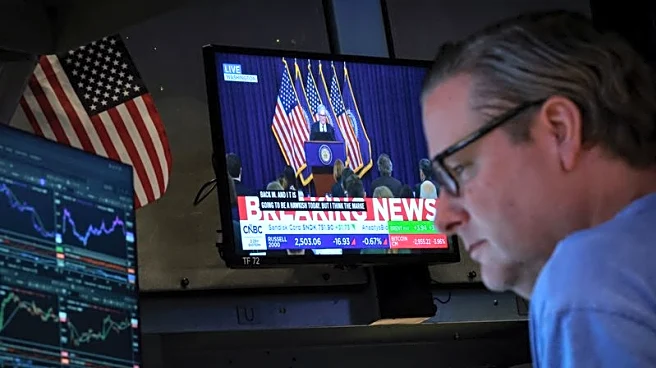
Investors are awaiting further economic data, including weekly jobless claims and the Philadelphia Fed Manufacturing Index, to gauge the economy's direction. The Federal Reserve's future actions regarding interest rates will also be crucial, as markets currently anticipate a potential rate cut later in the year. The duration of the Iran conflict remains a significant uncertainty, with potential implications for global energy markets and inflation. Stakeholders are hopeful for a resolution, but the situation remains fluid.