

What's Happening?
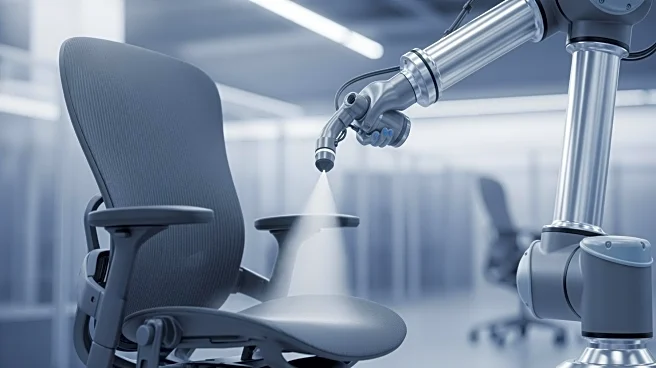
Interstuhl Büromöbel, a prominent European chair manufacturer, has adopted advanced robotic mould-surface technology from Durr to automate the coating process of its industrial and laboratory chairs. This new system utilizes the EcoSupply2 Core paint supply station and a 2K process managed by an EcoAUC, allowing for efficient coating with up to five colors. The technology involves the EcoGun AS Auto pro spray gun, which precisely coats the inside of foam moulds. Once the liquid PU foam is poured into the mould, it absorbs the coating, providing both color and necessary conductivity to prevent static charge in cleanroom and ESD environments. The system, installed in September 2025, includes a painting robot and six EcoSupply2 Core stations, designed
to handle up to five colors, although currently processing three. The technology was extensively tested at Durr's Test Center in the Czech Republic, ensuring reliable and clean processing.
Why It's Important?
The implementation of Durr's robotic technology by Interstuhl represents a significant advancement in the manufacturing process of high-quality office chairs. By automating the coating process, Interstuhl can enhance production efficiency and maintain high standards of quality, crucial for its reputation in the competitive furniture industry. The technology not only improves the aesthetic appeal of the chairs but also ensures they meet the functional requirements of specialized environments like cleanrooms. This move could set a precedent for other manufacturers in the industry, highlighting the importance of integrating advanced technologies to stay competitive. Additionally, the ability to handle multiple colors and the system's adaptability to confined spaces make it a versatile solution for various industrial applications.
What's Next?
Interstuhl's adoption of this technology may lead to further innovations in the furniture manufacturing sector, encouraging other companies to explore similar advancements. As the system is designed to handle up to five colors, Interstuhl might expand its product offerings, catering to a broader market with diverse color preferences. The success of this implementation could also prompt Durr to refine and market its technology to other industries requiring precise and efficient coating solutions. Stakeholders in the furniture industry will likely monitor the outcomes of this integration closely, assessing its impact on production costs, product quality, and market competitiveness.