








What's Happening?
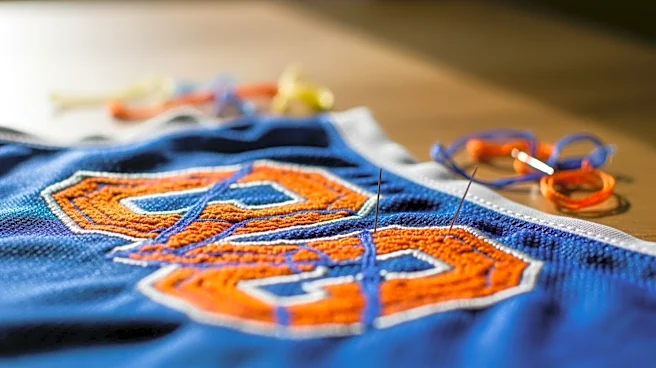
Ramell-Correen Frederick, known as 'Cheeks', is a textile artist and denim tailor who has gained attention for his unique street-side embroidery work in Brooklyn, New York. Following the New York Knicks' victory over the San Antonio Spurs, securing their
first NBA championship in 53 years, Cheeks set up outside the Habana Outpost restaurant in Fort Greene. Using a vintage embroidery machine, he created custom championship gear for fans, with prices starting at $20. His work quickly gained popularity on social media, as New Yorkers brought him various items to embroider, marking the historic win. Cheeks operates under the name Tattoo'd Cloth and is known for his mobile setup, which allows him to engage with the community directly.
Why It's Important?
Cheeks' work highlights a growing trend of personalized and sustainable fashion, where consumers seek unique, custom-made items rather than mass-produced goods. This approach not only supports local artists but also encourages a culture of upcycling and resourcefulness. By transforming existing clothing into personalized memorabilia, Cheeks contributes to a more sustainable fashion industry. His work also fosters community engagement, as it brings people together to celebrate a significant local event, reinforcing cultural and social ties within the community.
What's Next?
Cheeks plans to continue his street-side embroidery work, bringing his art to various locations across Brooklyn and Manhattan. As his popularity grows, he may explore new opportunities to expand his business, potentially collaborating with other artists or local businesses. The success of his work during the Knicks' championship celebration could lead to increased demand for his services at other major events, further embedding his role as a community artist.
Beyond the Headlines
Cheeks' approach to embroidery and fashion reflects broader cultural shifts towards valuing craftsmanship and individuality in consumer goods. His work challenges the fast fashion industry by promoting the idea that clothing can be both personal and sustainable. Additionally, his use of vintage machinery and traditional techniques underscores a respect for historical craftsmanship, offering a counter-narrative to the digital and automated processes that dominate modern manufacturing.