







What's Happening?
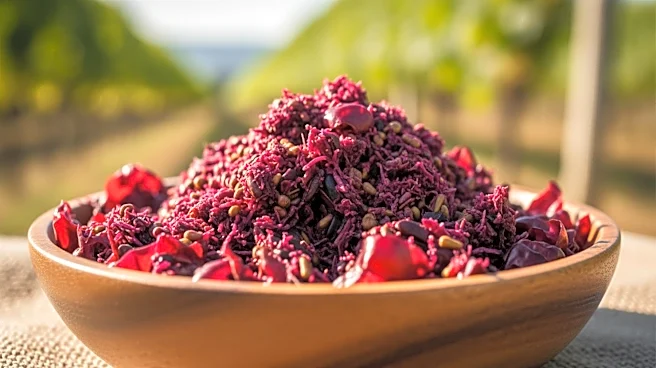
Researchers at Cornell University have discovered that grape pomace, a by-product of wine production, could serve as a sustainable alternative to antibiotics in poultry farming. The study, published in npj Biofilms and Microbiomes, tested the effects
of grape pomace on broiler chickens, comparing it to zinc bacitracin, a common antibiotic growth promoter. Results showed that a 0.5% inclusion of grape pomace in chicken feed improved weight gain, feed efficiency, and gut health, nearly matching the performance of antibiotics. This development comes amid growing concerns over antimicrobial resistance and the need for alternatives to antibiotics in animal agriculture.
Why It's Important?
The potential use of grape pomace as an antibiotic alternative is significant for the poultry industry, which faces challenges due to the withdrawal of antibiotic growth promoters. This shift is driven by concerns over antimicrobial resistance, which poses a threat to public health. By providing a natural and effective alternative, grape pomace could help maintain poultry health and growth rates without contributing to antibiotic resistance. Additionally, utilizing grape pomace, a waste product, could promote sustainability and reduce waste in the wine industry, creating a circular economy benefit.
What's Next?
Further research is needed to validate these findings in real-world conditions with larger flocks. Collaboration between wine producers and the poultry industry could facilitate the adoption of grape pomace as a feed additive. If successful, this approach could lead to widespread changes in poultry farming practices, reducing reliance on antibiotics and addressing public health concerns related to antimicrobial resistance.