




What's Happening?
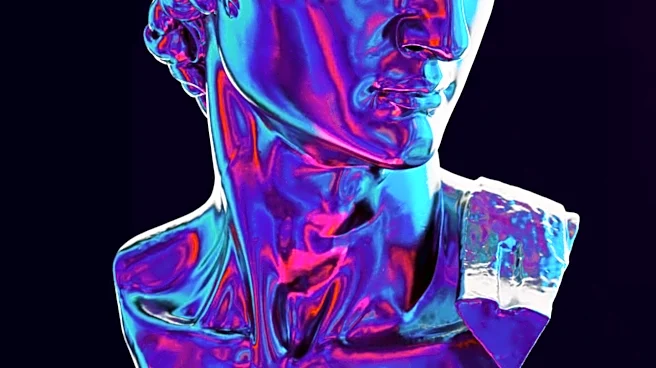
The use of artificial intelligence in creating political art has become increasingly prevalent, leading to a phenomenon described as the 'slopification' of political visuals. This trend is characterized by the rapid production of AI-generated images and
videos that respond to political crises in real-time. However, these creations often lack depth and lasting impact. The article discusses how AI-generated imagery, such as depictions of President Trump in religious iconography, has sparked controversy and debate. Despite the potential for AI to democratize art creation, the resulting works are often criticized for their lack of narrative coherence and artistic merit.
Why It's Important?
The rise of AI-generated political art highlights a shift in how political messages are communicated and consumed. This trend has implications for cultural discourse, as it challenges traditional notions of authorship and artistic value. The use of AI in art creation raises questions about the role of technology in shaping public perception and the potential for such works to influence political narratives. For the U.S., this development could impact how political messages are crafted and disseminated, potentially affecting public opinion and political engagement.
Beyond the Headlines
The reliance on AI for political art creation reflects broader societal trends towards digital immediacy and the commodification of cultural expression. This shift may lead to a devaluation of traditional artistic practices and a loss of cultural depth in political discourse. As AI continues to evolve, there is a need for critical examination of its role in art and its impact on cultural heritage. The challenge lies in balancing technological innovation with the preservation of meaningful artistic expression.