




What's Happening?
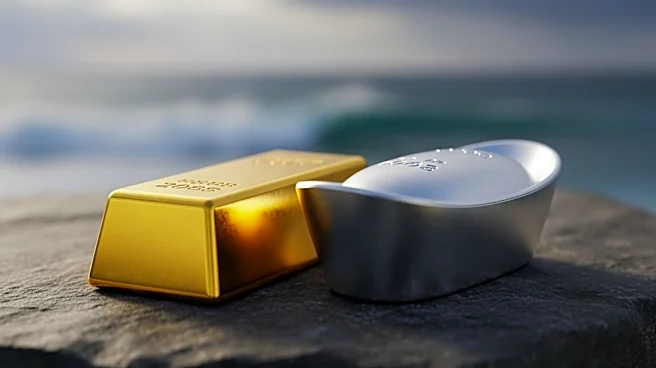
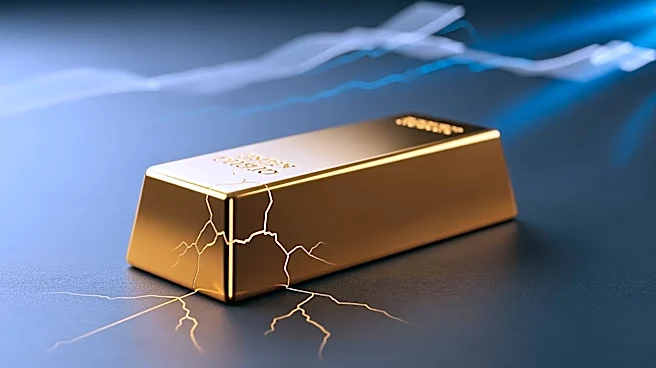
In early U.S. trading, spot gold prices have decreased while silver prices have firmed. Gold is trading at approximately $4,506.50 per ounce, down 0.72%, whereas silver is up 0.80%, trading near $75.875. The decline in gold prices is attributed to a stronger
U.S. dollar and rising oil prices, influenced by geopolitical tensions in the Strait of Hormuz. The U.S. and Iran have exchanged strikes, impacting oil prices and inflation expectations. The situation has led to increased demand for the U.S. dollar as a safe haven, affecting gold prices. Meanwhile, silver has maintained a positive session, supported by its industrial demand.
Why It's Important?
The fluctuations in gold and silver prices reflect the broader impact of geopolitical tensions on global markets. The Strait of Hormuz is a critical channel for oil transportation, and disruptions can significantly affect oil prices and inflation expectations. The current situation underscores the interconnectedness of global markets, where geopolitical events can influence commodity prices, currency values, and investor sentiment. For investors, these developments highlight the importance of monitoring geopolitical risks and their potential impact on asset prices. The mixed impact on gold and silver also illustrates the different factors influencing these metals, with gold often seen as a safe haven and silver benefiting from industrial demand.
What's Next?
As tensions in the Strait of Hormuz continue, markets will closely watch for any developments that could further impact oil and precious metal prices. Investors may adjust their portfolios in response to changing risk perceptions and inflation expectations. Additionally, upcoming economic data releases, such as the ISM Manufacturing Index and the May jobs report, could influence market sentiment and asset prices. The Federal Reserve's policy decisions will also be a key factor to watch, as interest rates and monetary policy can significantly affect commodity prices and currency values.