








What's Happening?
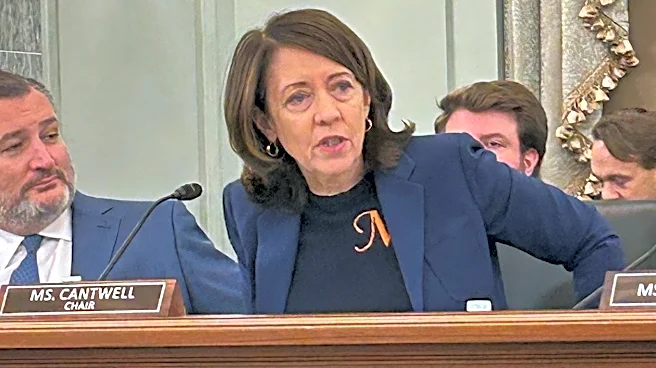
Two U.S. senators, Ted Cruz (R-Texas) and Maria Cantwell (D-Washington), have introduced a bipartisan bill aimed at stabilizing the college sports industry. The proposed legislation, known as the Protect College Sports Act, seeks to address issues such
as athlete eligibility, transfer rules, and spending caps. The bill would grant the NCAA an antitrust exemption, allowing it to enforce regulations more effectively, particularly concerning name, image, and likeness (NIL) deals. This move comes after a 2021 Supreme Court ruling that college sports are not exempt from antitrust laws, which has complicated the NCAA's regulatory efforts. The bill also proposes allowing conferences to pool broadcast rights for larger TV deals and aims to prevent the formation of a 'super league' by the Big Ten and Southeastern conferences. Additionally, it introduces measures to ensure fair competition and protect student-athletes from exploitation.
Why It's Important?
The introduction of this bill is significant as it addresses the growing concerns over the commercialization and competitive imbalance in college sports. By potentially restoring more regulatory power to the NCAA, the bill aims to create a more level playing field and protect the integrity of college athletics. The legislation could impact how college sports are broadcasted and monetized, affecting revenue distribution among conferences. It also seeks to close loopholes that allow wealthier programs to circumvent spending caps, which could lead to a more equitable distribution of resources. The bill's success could influence the future structure of college sports, including the potential for athlete collective bargaining, which could reshape the relationship between athletes and institutions.
What's Next?
The bill will need to garner bipartisan support to pass in the Senate, requiring at least 60 votes. As Cruz and Cantwell are high-ranking members of the Senate Commerce Committee, their involvement could facilitate the bill's progress. However, the proposal may face opposition from conferences like the Big Ten and SEC, which might prefer to maintain their financial and competitive advantages. The bill's progress will be closely watched by stakeholders in the college sports industry, including universities, athletes, and media companies. If passed, the legislation could lead to significant changes in how college sports are governed and commercialized.