


What's Happening?
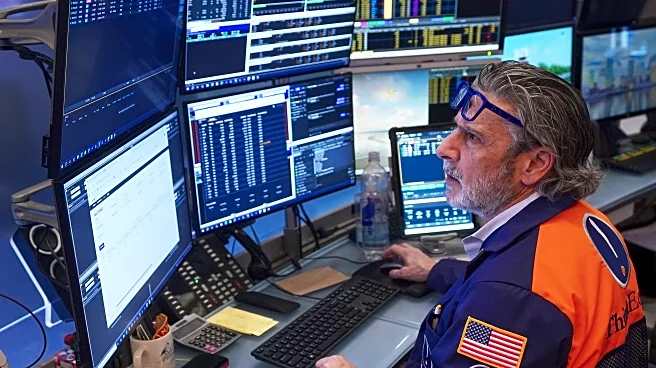
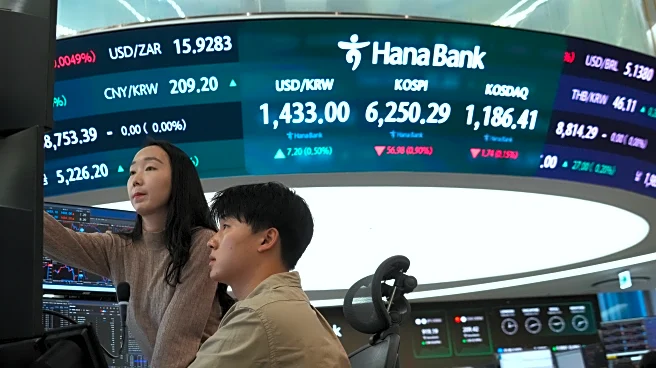
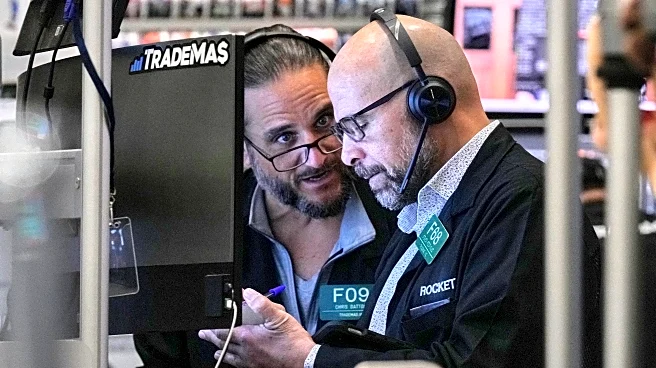
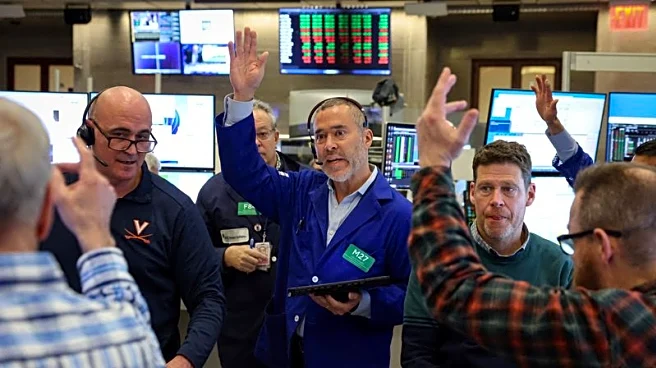
The U.S. stock market is experiencing significant volatility following a higher-than-expected inflation report, which has raised concerns about the economic outlook. The Dow Jones Industrial Average fell over 600 points as traders reacted to the latest
wholesale inflation data, which indicated that pricing pressures are more intense than previously anticipated. Despite the inflationary pressures, the 10-year Treasury yield remained below 4%, suggesting investor concerns about a potential stagflation scenario, where inflation rises alongside slowing economic growth. Additionally, there are growing fears that artificial intelligence (AI) could have a more detrimental impact on the labor market than initially thought. This concern is compounded by recent announcements from companies like Block, which plans to lay off 4,000 employees as it increases automation through AI.
Why It's Important?
The current economic situation is critical as it could influence monetary policy decisions and impact various sectors. Rising inflation could lead to changes in interest rate expectations, affecting borrowing costs and investment decisions. The potential for AI to disrupt the labor market adds another layer of complexity, as it could lead to job losses and alter business models across industries. Investors are closely monitoring the upcoming nonfarm payrolls report, which will provide insights into the labor market's health and influence market sentiment. The report's outcome could either alleviate or exacerbate fears of stagflation, impacting stock market performance and economic policy decisions.
What's Next?
Investors and policymakers will be closely watching the upcoming jobs report, which is expected to show the addition of 60,000 jobs in February with an unemployment rate holding at 4.3%. This data will be crucial in assessing the resilience of the U.S. economy and its ability to withstand inflationary pressures. Market participants are also anticipating potential revisions to previous employment figures, which could further influence interest rate expectations. As AI continues to evolve, its impact on employment and business operations will remain a key focus for investors and policymakers alike.