



What's Happening?
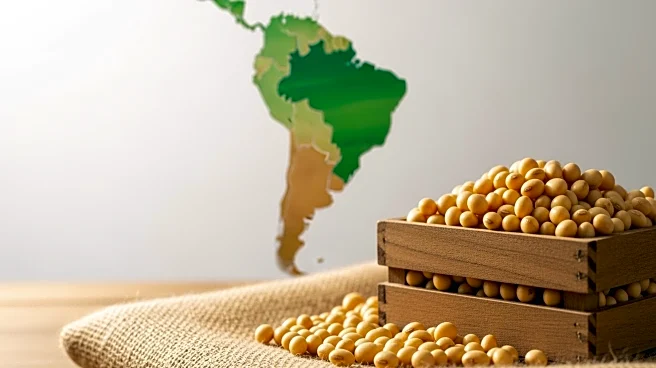
China has significantly decreased its purchases of U.S. agricultural exports, particularly soybeans, in response to tariff hikes imposed by President Trump. This shift has led Chinese companies to seek agricultural products from Latin American countries, such as Brazil. The change in trade dynamics has been particularly impactful on U.S. soybean farmers, as soybeans are a major component of American agriculture. In 2024, over 40% of U.S. soybean production was exported, with China being a major buyer. The reduction in Chinese purchases has created challenges for U.S. farmers who rely heavily on this export market.
Why It's Important?
The shift in China's agricultural sourcing has significant implications for U.S. farmers and the broader agricultural industry. The reduction
in soybean exports to China could lead to economic challenges for American farmers, potentially affecting their livelihoods and the agricultural economy. This change also highlights the broader impact of international trade policies and tariffs on domestic industries. As China invests more in Latin American agriculture, U.S. farmers may face increased competition and pressure to find alternative markets for their products.
What's Next?
U.S. farmers and agricultural stakeholders may need to explore new markets and strategies to mitigate the impact of reduced Chinese purchases. This could involve diversifying export destinations or increasing domestic demand for soybeans. Additionally, policymakers might consider revisiting trade agreements and tariffs to improve the competitiveness of U.S. agricultural exports. The long-term effects of China's investment in Latin America could reshape global agricultural trade patterns, necessitating strategic adjustments by U.S. farmers and industry leaders.