





What's Happening?
The integration of artificial intelligence (AI) in port operations is transforming the maritime industry by enhancing security and operational efficiency. As ports handle increasingly larger vessels, AI technologies are being employed to manage and monitor
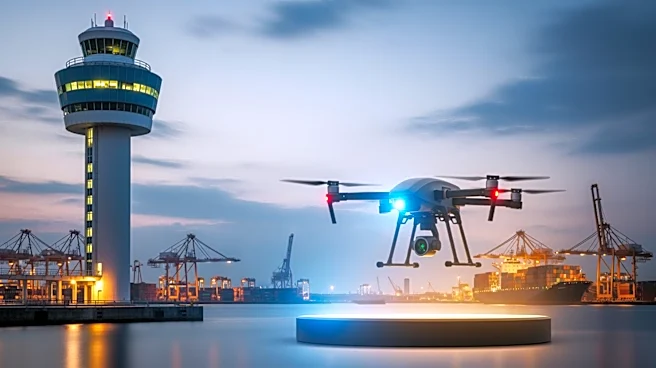
operations more effectively. AI-driven systems, including drones and advanced cameras, are being used to track vessel arrivals and monitor port perimeters. These technologies help in identifying security threats and improving response times to incidents. Additionally, AI is utilized in the automation of cranes and guided vehicles, streamlining the loading and unloading processes. The use of AI in ports is also addressing environmental challenges, with extreme temperature-resistant cameras being deployed to withstand harsh weather conditions. This technological advancement is crucial as ports face growing international tensions and the need to protect high-value cargoes.
Why It's Important?
The adoption of AI in port operations is significant for several reasons. It enhances security by providing comprehensive monitoring capabilities, which are essential in preventing theft and ensuring the safety of cargo and personnel. The efficiency gains from AI-driven automation can lead to faster turnaround times for ships, reducing congestion and improving the overall productivity of ports. This is particularly important as global trade volumes continue to rise. Furthermore, the ability to analyze large datasets from security systems allows for better risk management and threat detection, which is vital in an era of increasing cyber and physical security threats. The implementation of AI in ports also supports compliance with stricter security regulations, ensuring that ports remain competitive and secure in the global market.
What's Next?
As AI technology continues to evolve, ports are likely to see further integration of these systems into their operations. Future developments may include more sophisticated AI algorithms for predictive analytics, which could anticipate security threats before they occur. Ports will also need to address the cybersecurity risks associated with increased digitalization, ensuring that their systems are protected against potential breaches. Collaboration between port authorities, technology providers, and government agencies will be crucial in developing robust security frameworks. Additionally, ongoing investment in AI technology will be necessary to maintain and enhance the capabilities of port operations, ensuring they can adapt to future challenges and opportunities in the maritime industry.