



What's Happening?
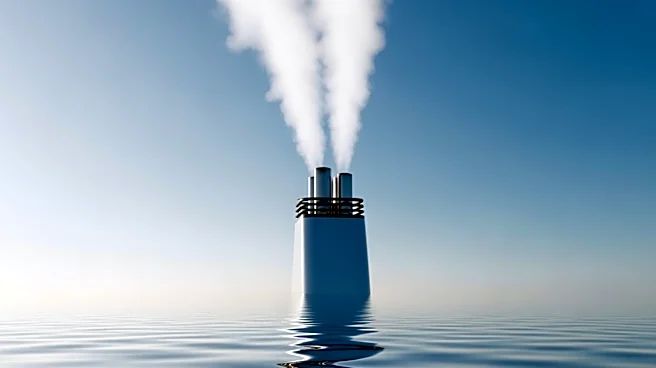
The maritime industry is under increasing pressure to address emissions from ship exhausts, which contribute to air pollution in port cities. A World Bank report highlights that over 250 million people globally are exposed to such pollution. The European
Union's FuelEU Maritime regulation, set to take effect in 2030, will require ships to connect to onshore power or demonstrate emissions reductions through alternative fuels. Companies like Auramarine and PowerCell are at the forefront of developing solutions to meet these new standards. Auramarine focuses on biofuels and dual-fuel systems, while PowerCell is advancing hydrogen fuel cell technology for maritime applications.
Why It's Important?
The shift towards cleaner maritime fuels is crucial for reducing the industry's environmental impact and improving public health in port cities. The new regulations will drive innovation and investment in alternative fuel technologies, potentially leading to significant reductions in greenhouse gas emissions. This transition also presents economic opportunities for companies specializing in clean energy solutions. However, the industry faces challenges in adapting existing vessels and infrastructure to accommodate new fuel types, which may require significant capital investment.
What's Next?
As the 2030 deadline approaches, maritime companies will need to accelerate the adoption of alternative fuels and technologies to comply with regulations. This may involve retrofitting existing ships and investing in new builds designed for dual-fuel capabilities. Collaboration between industry stakeholders, regulators, and technology providers will be essential to ensure a smooth transition. The development of infrastructure for alternative fuels, such as hydrogen and methanol, will also be critical to support widespread adoption.