





What's Happening?
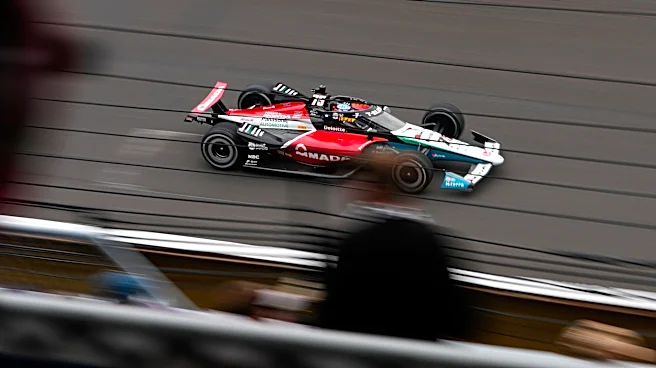
The NTT IndyCar Series has announced a new qualifying format for the Indianapolis 500, aiming to enhance the competitive drama of the event. With 33 drivers entered for the May 24 race, the series seeks to maintain excitement despite the absence of bumping,
a traditional element of the qualifying process. The revised format, set for May 16 and 17, involves a two-day PPG Presents Armed Forces Qualifying event. The Firestone Fast Six segment will determine the pole position, with the fastest driver earning a $100,000 prize and 12 championship points. Points will decrease incrementally down to the 12th fastest driver. The first day will lock in positions 16-33, while the top nine drivers will advance to the Top 12 qualifying on the second day. Cars ranked 10th-15th will compete in 'The Final 15' round for the remaining Top 12 spots. This new system is designed to highlight the skill required to secure a front-row start in the prestigious race.
Why It's Important?
The introduction of a new qualifying format for the Indianapolis 500 is significant as it seeks to maintain the event's competitive edge and viewer interest. By adding complexity and stakes to the qualifying rounds, IndyCar aims to enhance the spectacle for fans and participants alike. This change could impact the strategies of teams and drivers, as they navigate the new rules to secure advantageous starting positions. The format also underscores the series' commitment to innovation and adaptation in motorsports, potentially influencing how other racing events approach their qualifying processes. For fans, the revised format promises increased excitement and engagement, both at the track and through broadcasts.
What's Next?
As the new qualifying format is implemented, teams and drivers will need to adapt their strategies to the revised rules. The success of this format will be closely watched by stakeholders, including team owners, sponsors, and broadcasters, as it could set a precedent for future events. The outcome of the qualifying rounds will also influence race day dynamics, as starting positions play a crucial role in race strategy. Fans and analysts will be keen to see how the changes affect the competition and whether they enhance the overall experience of the Indianapolis 500.