







What's Happening?
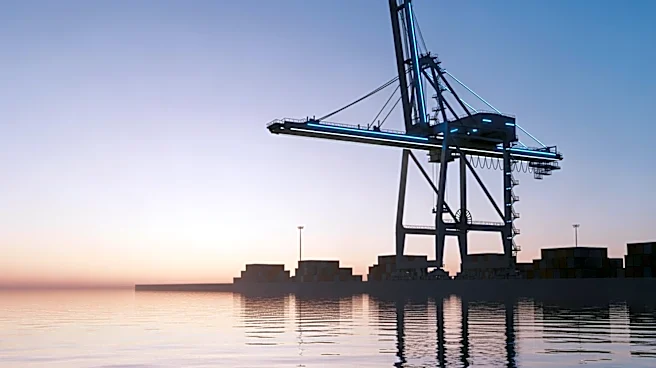
ABB has unveiled its Waterside Automation solution, designed to automate quay crane operations in container terminals. This innovation allows quay cranes to handle a larger portion of container operations automatically, reducing the reliance on continuous
manual control. The solution aims to address a significant bottleneck in container terminal efficiency, facilitating a gradual shift towards fully autonomous quay crane operations. As container terminals face increasing pressure to maintain schedule reliability, many have already automated substantial parts of their yard operations. ABB's new solution is expected to further streamline these processes, enhancing overall operational efficiency.
Why It's Important?
The introduction of ABB's Waterside Automation solution is significant for the maritime industry, particularly in the context of increasing global trade and the demand for more efficient logistics operations. By automating quay crane operations, container terminals can improve their throughput and reduce operational delays, which are critical for maintaining competitive edge in the shipping industry. This advancement not only promises to enhance the efficiency of container handling but also supports the broader trend towards automation in logistics, potentially leading to cost savings and increased reliability in shipping schedules. Stakeholders in the maritime industry, including port operators and shipping companies, stand to benefit from these improvements in operational efficiency.
What's Next?
As ABB's Waterside Automation solution is implemented, it is likely that more container terminals will adopt similar technologies to remain competitive. This could lead to a broader industry shift towards increased automation in port operations. Additionally, the transition to autonomous quay crane operations may prompt discussions around workforce implications, as automation could impact jobs traditionally performed by manual labor. Industry stakeholders, including labor unions and port authorities, may need to engage in dialogue to address these changes and ensure a smooth transition for affected workers.