





What's Happening?
The ongoing conflict involving the US, Israel, and Iran has led to significant disruptions in global oil supplies, impacting the aviation industry. The International Energy Agency has warned of potential jet fuel shortages in Europe, prompting airlines
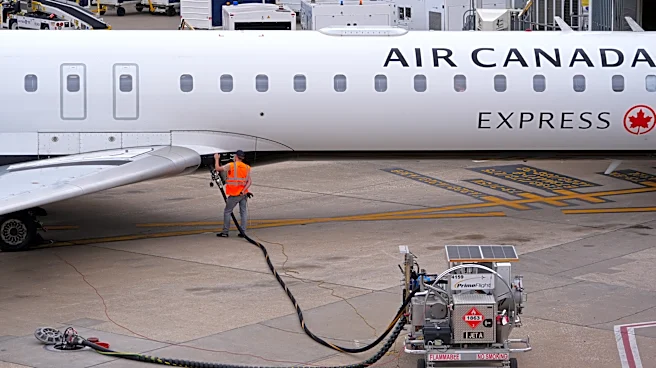
to reduce flights and increase fares. Air Canada, for instance, plans to suspend its service to New York's JFK Airport to cut fuel costs. Other airlines, including United, Delta, and Air France-KLM, have also reduced routes and raised ticket prices. The conflict has caused the price of jet fuel to surge, affecting airline operations and consumer travel plans.
Why It's Important?
The rising fuel costs and flight reductions have significant implications for the travel industry and consumers. Airlines are forced to adopt conservative pricing strategies, leading to higher airfares and additional fees. This situation affects travelers' budgets and could deter travel plans, impacting tourism and related sectors. The conflict's impact on oil supply chains highlights the vulnerability of global industries to geopolitical tensions. Airlines and consumers must navigate these challenges, with potential long-term effects on travel habits and industry profitability.
What's Next?
Travelers are advised to book flights early to avoid price hikes and consider flexible travel plans. Airlines may continue to adjust routes and pricing strategies based on fuel cost fluctuations and geopolitical developments. The industry will closely monitor the situation in the Strait of Hormuz and any potential resolutions to the conflict, which could stabilize fuel prices and airline operations. Stakeholders, including governments and industry leaders, may need to explore alternative fuel sources or efficiency measures to mitigate future disruptions.