





What's Happening?
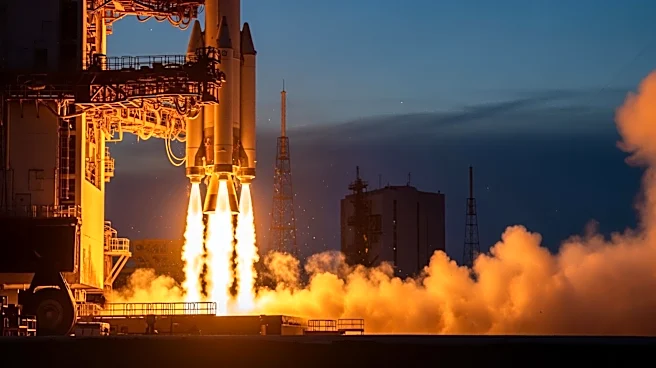
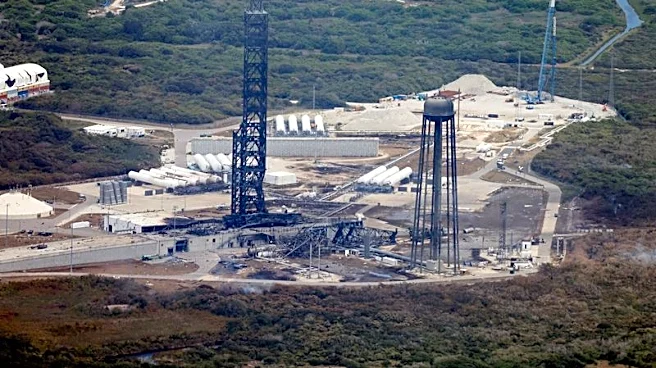
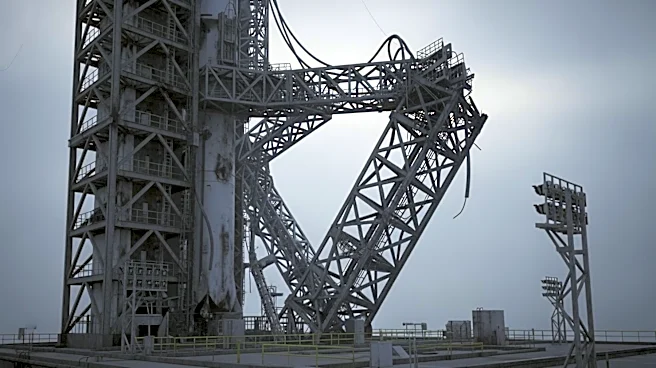
Blue Origin's New Glenn rocket experienced a catastrophic explosion during a static-fire test at Cape Canaveral's Launch Complex 36, causing significant damage to the launch pad and infrastructure. The incident, which occurred on May 28, has led to the collapse
of a lightning tower and destruction of the rocket's transporter-erector. The explosion has delayed the NG-4 launch, which was set to carry 48 Amazon Leo satellites. Blue Origin is currently investigating the cause of the explosion and planning the pad's reconstruction. The setback affects several customers, including NASA, which had planned to use New Glenn for lunar missions. The explosion also impacts Amazon's satellite deployment schedule and AST SpaceMobile's satellite launches.
Why It's Important?
The New Glenn explosion exacerbates an already constrained launch market, where demand far exceeds supply. This incident could delay Blue Origin's ability to fulfill contracts, affecting companies like Amazon and AST SpaceMobile. The disruption may lead to increased launch costs and further strain on the market. NASA's lunar missions could face delays, impacting the agency's timeline for lunar exploration. The incident highlights the challenges faced by the commercial space industry in maintaining reliable launch schedules and the potential financial implications for companies relying on these launches.
What's Next?
Blue Origin is working on a plan to rebuild the damaged launch pad, but the timeline for resuming New Glenn launches remains uncertain. The company must complete its investigation into the explosion and implement necessary safety measures. NASA and other stakeholders will closely monitor Blue Origin's progress, as their missions depend on the availability of the New Glenn rocket. The incident may prompt companies to seek alternative launch providers, potentially benefiting competitors like SpaceX and United Launch Alliance.