
What's Happening?
The vertical farming industry is experiencing significant growth as it moves towards more commercially disciplined operations. Strategic Market Research reports that the market is projected to grow from
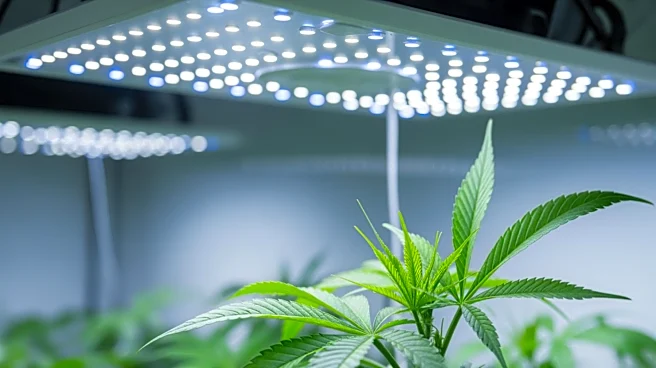
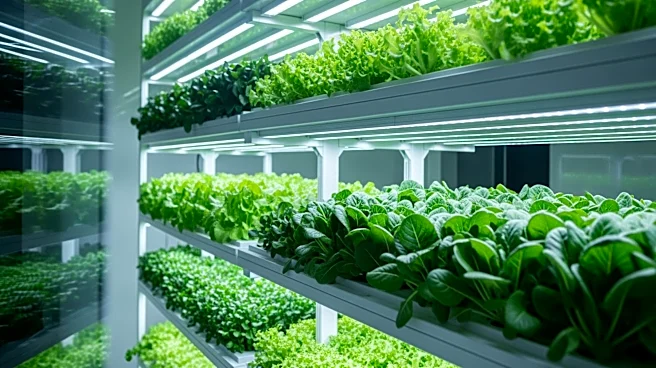
USD 9.4 billion in 2025 to USD 28.32 billion by 2030, driven by the need for resource efficiency and localized food production. Vertical farming systems optimize water and energy use, allowing for year-round production independent of climate conditions. This shift is particularly beneficial for urban areas, where controlled-environment agriculture can reduce spoilage and improve supply chain resilience.
Why It's Important?
The expansion of vertical farming represents a critical shift in food production, addressing challenges such as climate variability, urban expansion, and resource constraints. By optimizing resource use and reducing dependency on traditional agricultural inputs, vertical farming offers a sustainable solution to meet growing food demands. The industry's growth is likely to impact traditional farming practices, encouraging a move towards more efficient and resilient food systems. As urban populations continue to rise, the ability to produce food closer to demand centers will be increasingly important for ensuring food security and reducing environmental impact.
What's Next?
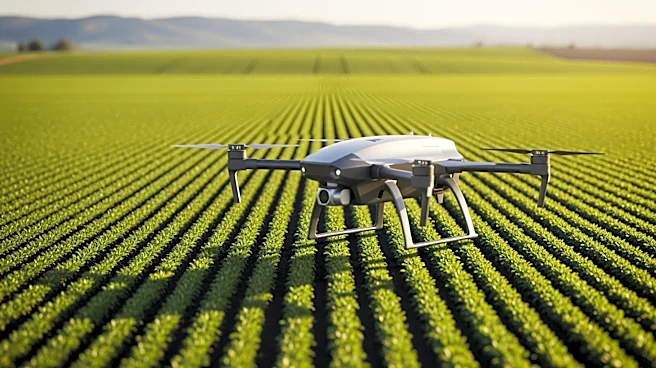
As the vertical farming market continues to grow, operators will need to focus on improving energy efficiency and integrating advanced technologies to enhance production consistency. The industry's future will likely involve increased use of automation, machine learning, and IoT to optimize operations. Additionally, as the market matures, competition will shift towards achieving economic advantages through resource productivity and environmental stability. The continued development of vertical farming systems will play a crucial role in shaping the future of sustainable agriculture.