



What's Happening?
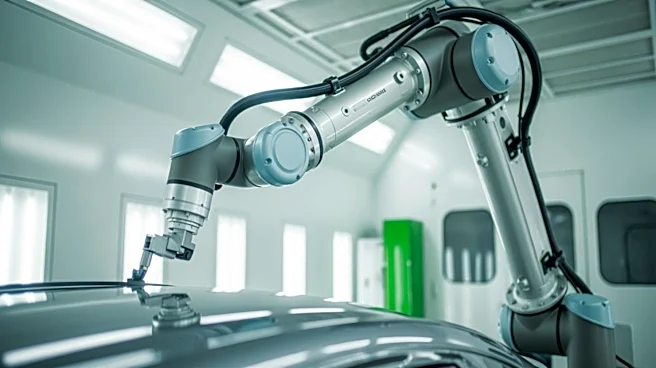
Dürr has introduced a new generation of painting robots, the EcoRP4, designed to enhance the efficiency of car body painting tasks. The EcoRP4 features an asymmetric architecture that allows the applicator to access hard-to-reach areas of car bodies,
such as door rebates and hinges, more effectively. This design innovation is aimed at reducing maintenance requirements and operational costs, particularly benefiting car manufacturers with high production volumes. The EcoRP4 is a successor to the six-axis EcoRP E/L x33iC robot and is tailored for high-volume, standardized painting applications. The robot's design includes fewer components and a simplified mechanical system, which contribute to lower lifecycle costs without compromising process technology. The EcoRP4 can be integrated into paint shops in various configurations, including floor mounting and tower installation, and is available in mirrored versions to support use on both sides of the car body.
Why It's Important?
The introduction of the EcoRP4 represents a significant advancement in the automotive manufacturing industry, particularly in the realm of painting technology. By reducing the number of components and simplifying the mechanical system, Dürr aims to lower the overall costs associated with robot maintenance and operation. This is crucial for car manufacturers who are constantly seeking ways to optimize production efficiency and reduce expenses. The ability of the EcoRP4 to access difficult areas of car bodies more easily can lead to improved paint quality and consistency, which are critical factors in automotive manufacturing. Additionally, the robot's design allows for faster color changes and reduced paint waste, further enhancing its cost-effectiveness. As the automotive industry continues to evolve, innovations like the EcoRP4 are essential for manufacturers to remain competitive and meet the demands of high-volume production.
What's Next?
Dürr plans to launch the EcoRP4 in 2027, and its introduction is expected to influence the strategies of car manufacturers regarding their painting processes. As the EcoRP4 becomes available, manufacturers may consider upgrading their existing painting lines to incorporate this new technology, potentially leading to a shift in industry standards. The robot's efficiency and cost-saving features could prompt other companies to develop similar technologies, fostering increased competition and innovation in the field of industrial robotics. Stakeholders in the automotive industry, including manufacturers and suppliers, will likely monitor the performance and adoption of the EcoRP4 closely to assess its impact on production processes and cost structures.