



What's Happening?
Ghana has officially entered the global lithium market following the approval of a major mining lease by its Parliament. This development comes after nearly three years of regulatory delays that had hindered investment in the country's lithium sector.
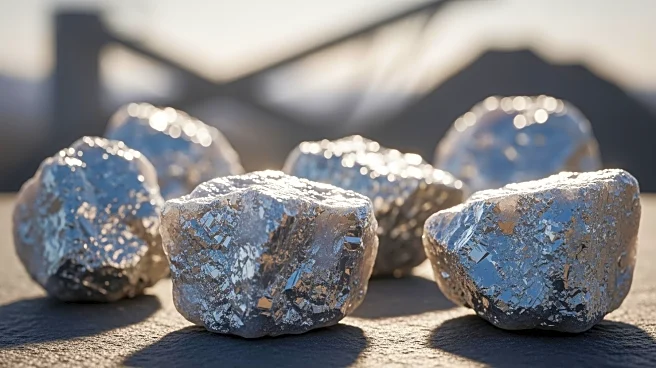
The Ewoyaa Lithium Project, managed by Atlantic Lithium, an Australia- and UK-listed company, has been granted exclusive rights to mine and process lithium in Ghana's Central Region for an initial 15-year period. The project is expected to attract significant international interest, particularly from Australian investors, due to its listing on the Australian Securities Exchange. The Ghanaian government will hold a 13% free-carried interest in the project, ensuring direct participation without upfront capital investment. The fiscal structure of the agreement is designed to balance state revenue with investor confidence, with royalties ranging from 5% to 12% based on global lithium prices.
Why It's Important?
This move positions Ghana as a potential key supplier to U.S. battery supply chains, which are seeking alternatives to China. The development signals a shift in Ghana's resource strategy towards minerals critical to the global energy transition, such as lithium, which is essential for electric vehicles and renewable energy storage. The project is expected to revive economic activity in the Ewoyaa region, creating jobs and stimulating local businesses. It also reflects a broader trend across Africa, where countries are expanding lithium and other battery mineral projects to capture greater value within global supply chains. The Ewoyaa mine is set to become one of Africa's largest lithium projects, highlighting its strategic importance in supply diversification.
What's Next?
With the ratification of the mining lease, Atlantic Lithium can now advance financing discussions and move closer to a final investment decision. The project has already secured up to $16.4 million in funding from Ghanaian institutional investors and Long State Investments. As the project progresses, it is expected to create significant economic opportunities for local communities and contribute to Ghana's economic growth. The development also aligns with global efforts to diversify supply chains and reduce reliance on Chinese lithium, potentially impacting global market dynamics.