
What's Happening?
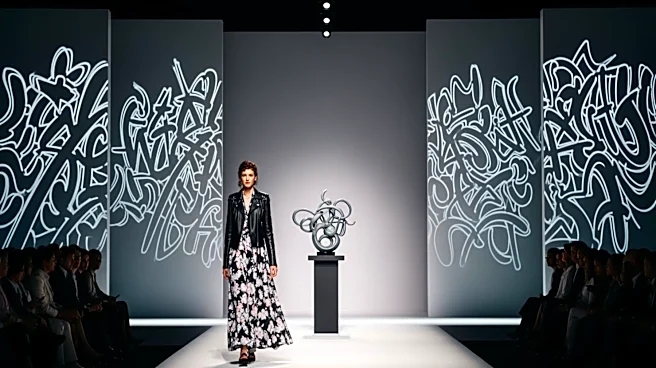
Louis Vuitton's Resort 2027 collection, designed by Nicolas Ghesquière, prominently features a suitcase customized by the late American Pop artist Keith Haring. This suitcase, originally graffitied by Haring in 1984,
was showcased at the Frick and is part of Louis Vuitton's archive after being sold at Bonham's for $35,000 in 2020. The collection reflects a blend of uptown and downtown New York aesthetics, drawing inspiration from the 1980s, a period frequently revisited by Ghesquière. The collaboration aligns with the Keith Haring Foundation's mission to share art widely and support philanthropic causes, including HIV/AIDS and youth services.
Why It's Important?
The inclusion of Keith Haring's artwork in a high-profile fashion collection underscores the enduring influence of his art and its integration into mainstream culture. This collaboration highlights the intersection of art and fashion, promoting Haring's legacy and the foundation's philanthropic goals. For Louis Vuitton, this move strengthens its cultural relevance and appeal, particularly in the U.S. market, where European fashion houses are increasingly seeking growth. The collection also reflects a broader trend of fashion brands leveraging historical and cultural narratives to enhance brand prestige and consumer engagement.
What's Next?
As Louis Vuitton continues to explore collaborations that blend art and fashion, the brand may further engage with American cultural icons to expand its influence in the U.S. market. The success of this collection could inspire other fashion houses to pursue similar partnerships, potentially leading to a broader trend of art-inspired fashion lines. Additionally, the Keith Haring Foundation may see increased interest and support for its causes, furthering its impact on arts and social services.
Beyond the Headlines
This collaboration raises questions about the commercialization of art and its implications for artistic integrity. While it brings Haring's work to a wider audience, it also prompts discussions about the balance between artistic expression and commercial interests. The collection's focus on exclusivity and heritage may also influence consumer perceptions of luxury, emphasizing the value of unique, historically significant pieces.