



What's Happening?
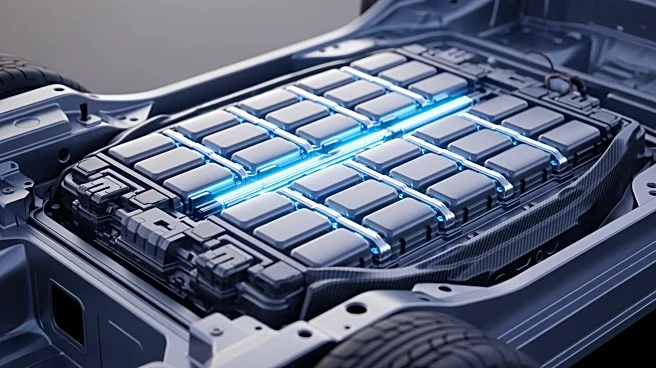
Recent advancements in electric vehicle (EV) technology have seen the integration of battery cells directly into the car's body, a method known as cell-to-body architecture. This approach, pioneered by companies like BYD and Volvo, eliminates the need for traditional battery packs, thereby reducing vehicle weight, freeing up space, and cutting costs. The concept was initially floated by Tesla in 2020, but has since been adopted more aggressively by other automakers. The Chalmers University in Sweden has been at the forefront of this innovation, focusing on using carbon fiber to enhance the structural integrity and efficiency of these batteries. This method not only simplifies assembly but also uses fewer materials, making it a cost-effective
solution for the EV industry.
Why It's Important?
The cell-to-body technology represents a significant shift in the EV industry, promising to make electric vehicles more affordable and efficient. By reducing the weight and cost of EVs, this innovation could accelerate the adoption of electric vehicles, contributing to a reduction in carbon emissions and reliance on fossil fuels. Automakers like BYD and Volvo are leading this charge, potentially setting new industry standards and challenging competitors like Tesla, which has yet to fully capitalize on this technology. The broader adoption of this technology could also spur further research and development in battery efficiency and sustainability, impacting the global automotive market and environmental policies.
What's Next?
As more automakers adopt cell-to-body technology, the industry could see a wave of new EV models that are lighter, more efficient, and cost-effective. Companies like Volvo are already planning to release new models, such as the Volvo EX60 SUV, which promises a best-in-class range and fast charging capabilities. This could lead to increased competition among automakers to innovate and improve battery technology further. Additionally, the success of this technology could influence regulatory bodies to update standards and incentives for electric vehicles, promoting wider adoption and investment in sustainable transportation solutions.