






What's Happening?
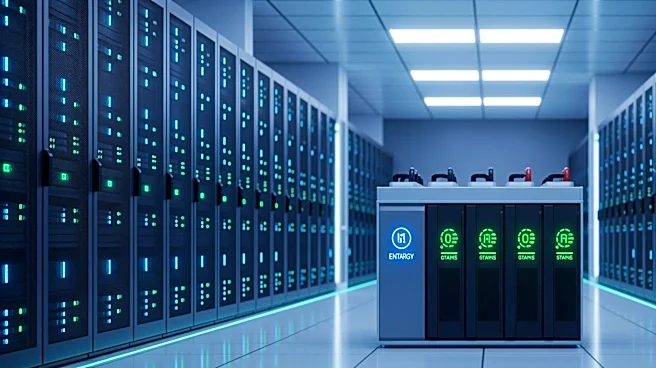
The Electric Reliability Council of Texas (ERCOT) has reported a significant increase in power demand due to a surge in large data center projects. Texas is on track to become the world's data center capital by 2030, surpassing Virginia. The demand for
power is expected to quadruple by 2032, driven by the rapid development of AI data centers. This growth has led to concerns about the capacity of existing power plants and transmission lines, resulting in potential delays of several years for data centers to connect to the grid. Some developers, like Oracle and OpenAI, are opting to build their own on-site power plants using natural gas to circumvent these delays.
Why It's Important?
The rapid expansion of data centers in Texas highlights the growing demand for digital infrastructure, driven by advancements in AI and cloud computing. This trend poses significant challenges for the state's power grid, which may struggle to meet the increased demand. The situation underscores the need for strategic planning and investment in energy infrastructure to support technological growth. The potential delays in grid connections could impact the operations of major tech companies and slow down the pace of digital transformation. Additionally, the reliance on natural gas for on-site power generation raises environmental concerns and highlights the need for sustainable energy solutions.
What's Next?
ERCOT plans to consult with regulators to evaluate the accuracy of its demand forecasts and consider potential adjustments. The outcome of these consultations could influence future energy policies and infrastructure investments in Texas. Meanwhile, data center developers may continue to explore alternative power solutions to mitigate the impact of grid delays. The situation may prompt discussions on the balance between technological growth and sustainable energy practices, potentially leading to policy changes that encourage renewable energy adoption in the tech industry.