What's Happening?
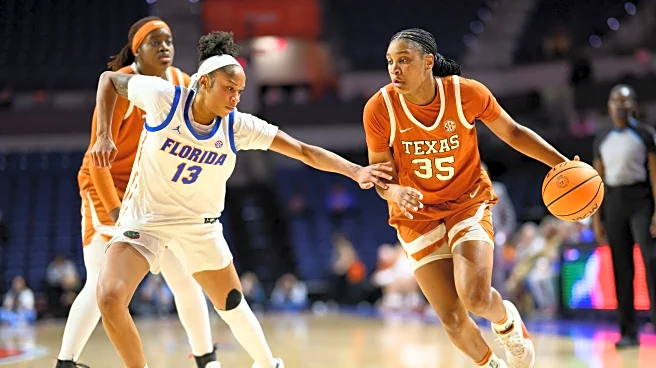
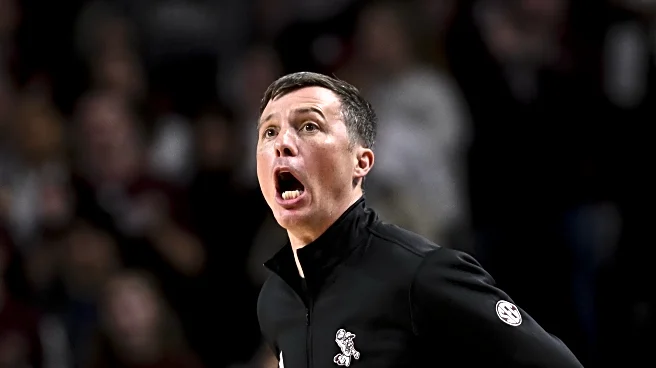
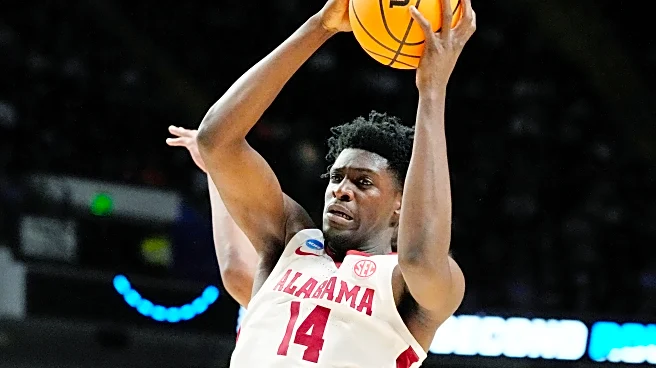
Florida coach Todd Golden's remark, 'we’re gonna beat ‘em anyways,' has become a focal point ahead of the basketball game between Florida and Alabama. The comment was made in response to Alabama center Charles Bediako's return to college basketball. Golden insists the comment was not meant to be disrespectful but acknowledges it has added to the media buildup for the game. The matchup, set to take place at the O’Connell Center, features Florida, ranked 19th, against the 23rd-ranked Alabama. Bediako, who is involved in a legal battle to regain college eligibility after leaving for the NBA, has been allowed to play temporarily due to a court order. His presence adds a significant challenge for Florida, known for its strong rebounding capabilities.
Why It's Important?
The controversy surrounding Golden's comment and Bediako's eligibility highlights ongoing debates in college sports about player rights and eligibility rules. Bediako's case, involving a temporary restraining order allowing him to play, underscores the complexities of NCAA regulations and the influence of legal interventions. This situation could set a precedent for future cases where athletes seek to return to college sports after pursuing professional opportunities. The outcome of this game and the legal proceedings could impact team dynamics and strategies in the Southeastern Conference, affecting rankings and postseason prospects.
What's Next?
The game between Florida and Alabama is expected to be a high-stakes encounter, with both teams aiming to solidify their standings. The legal proceedings regarding Bediako's eligibility are ongoing, with an injunction hearing anticipated. The outcome of this case could influence NCAA policies and the approach of other athletes in similar situations. Coaches and administrators across college sports are likely to monitor the situation closely, as it may prompt discussions on eligibility rules and the role of legal systems in sports.
Beyond the Headlines
The situation raises ethical questions about the balance between competitive advantage and fair play in college sports. The involvement of a judge with ties to Alabama in granting the restraining order adds a layer of complexity, highlighting potential conflicts of interest in legal decisions affecting sports. This case may prompt broader discussions about the integrity of college athletics and the need for clear, consistent regulations governing player eligibility and transfers.