
What's Happening?
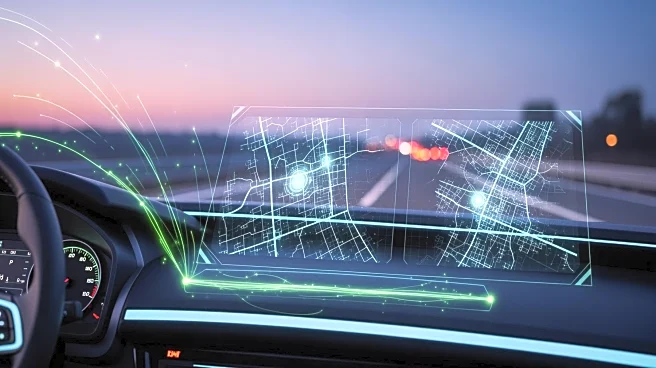
Artificial intelligence (AI) is increasingly being integrated into the transportation industry, offering significant improvements in logistics and fleet management. The sector faces challenges such as rising
fuel costs, unpredictable weather, and heightened customer expectations for speed and transparency. AI provides solutions by enabling companies to operate with greater agility and precision. While fully autonomous vehicles are not yet commonplace, AI is already delivering measurable benefits. According to a Forbes article, smarter traffic management and route optimization are among the most impactful applications of AI in transportation. A report by ZipDo, an AI solutions agency, indicates that 65% of trucking companies plan to increase their investment in AI over the next three years. AI is used to reduce inefficiencies, improve customer satisfaction, and manage complex logistics networks.
Why It's Important?
The integration of AI in transportation is crucial as it addresses several industry challenges, including cost reduction and service improvement. AI-driven routing, for instance, reduces delivery delays by 22% and cuts fuel costs by 15% on average. This is particularly important during winter months when weather disruptions can affect schedules. By leveraging AI, companies can reroute vehicles in real-time, ensuring timely deliveries and minimizing downtime. The ability to anticipate peak travel periods and suggest alternative delivery windows helps avoid congestion and maintain efficiency. As AI becomes a competitive necessity, companies that fail to adapt risk falling behind as rivals use technology to cut costs, improve delivery accuracy, and enhance service quality.
What's Next?
As AI continues to evolve, its role in transportation is expected to expand. Companies are likely to increase their investment in AI technologies to further optimize operations and maintain competitiveness. The focus will be on enhancing AI capabilities to handle more complex logistics networks and improve real-time decision-making. Stakeholders, including trucking companies and logistics managers, will need to adapt to these technological advancements to stay ahead in the industry. The ongoing development of AI could also lead to more sophisticated applications, potentially paving the way for fully autonomous vehicles in the future.