


What's Happening?
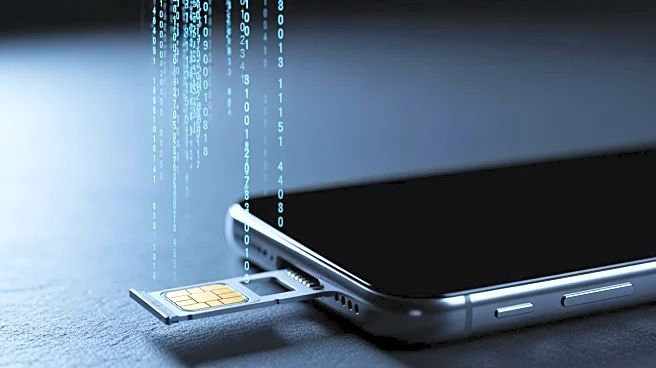
SIM swap attacks have exposed critical flaws in identity security, as criminals exploit mobile phone numbers to gain unauthorized access to personal and financial accounts. These attacks involve convincing mobile carriers to transfer a victim's phone number to a SIM card
controlled by the attacker, allowing them to intercept authentication codes and reset passwords. The prevalence of SIM swap attacks has increased due to abundant breached data and social engineering tactics, posing significant risks to both consumers and enterprises. Organizations relying on phone numbers for identity verification are operating under a false sense of security.
Why It's Important?
The rise of SIM swap attacks underscores the need for stronger identity verification methods and highlights the vulnerabilities of relying on phone numbers as secure identity factors. These attacks can lead to significant financial losses and compromise sensitive information, affecting both individuals and businesses. The growing threat of SIM swaps calls for a reevaluation of identity security practices, emphasizing the importance of adopting phishing-resistant authentication methods and enhancing account recovery processes. Organizations must address these vulnerabilities to protect against identity theft and account takeovers.
Beyond the Headlines
The implications of SIM swap attacks extend beyond immediate financial losses, as they reveal systemic weaknesses in identity security frameworks. The reliance on phone numbers as identity credentials is fundamentally flawed, necessitating a shift towards more secure authentication methods. Telecommunications providers play a crucial role in preventing SIM swaps by implementing stronger verification processes and monitoring for suspicious activity. The evolving threat landscape requires continuous adaptation and investment in identity threat detection and risk mitigation strategies.