






What's Happening?
Arizona Wildcats basketball coach Tommy Lloyd has signed a new five-year contract extension with Arizona, removing a key non-compete clause that previously restricted his movement within the Big 12 conference. This change has led to speculation that Lloyd could
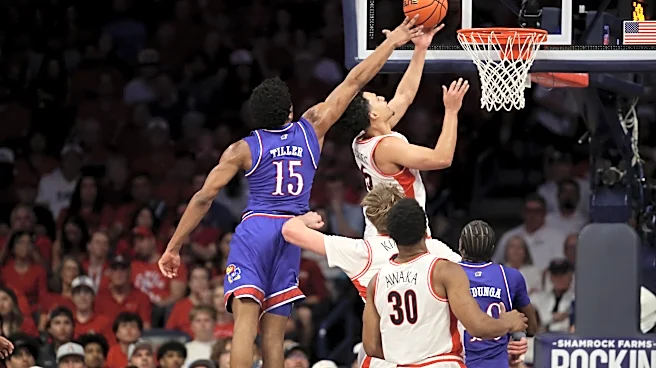
be a top candidate to replace Bill Self as head coach at Kansas when Self retires. Lloyd's tenure at Arizona has been marked by significant success, including a 36-3 record last season and a Final Four appearance. His new contract includes a $1 million increase to the buyout amount, providing him with more flexibility to leave for another position, albeit at a substantial cost. Lloyd's impressive record and reputation make him a strong candidate for future coaching opportunities, particularly at Kansas, where Self has been a dominant figure in college basketball.
Why It's Important?
The removal of the non-compete clause in Tommy Lloyd's contract is significant for both Arizona and Kansas basketball programs. For Arizona, it means potentially losing a successful coach who has brought the team to new heights, including a Final Four appearance. For Kansas, it opens the possibility of securing a high-caliber coach to succeed Bill Self, who has been a cornerstone of the program. Lloyd's potential move could impact recruiting strategies and team dynamics in both programs. His success at Arizona, coupled with his experience under Mark Few at Gonzaga, positions him as a desirable candidate for any top-tier college basketball program. The financial implications of his contract change also highlight the competitive nature of coaching hires in college sports.
What's Next?
If Bill Self decides to retire in the near future, Kansas may consider reaching out to Tommy Lloyd as a potential successor. The financial aspects of Lloyd's contract, including the increased buyout amount, will play a crucial role in any negotiations. Kansas will need to weigh the benefits of hiring Lloyd against the costs involved. Meanwhile, Arizona will likely focus on retaining Lloyd and continuing their successful run under his leadership. The decision-making process for both programs will involve strategic planning and consideration of long-term goals. Stakeholders, including university officials and fans, will be closely monitoring developments in this coaching scenario.
Beyond the Headlines
The potential coaching change at Kansas could have broader implications for college basketball, affecting team rivalries and conference dynamics. Lloyd's move could influence other coaching decisions within the Big 12 and beyond, as programs seek to maintain competitive edges. Additionally, the situation underscores the importance of contract negotiations and clauses in shaping career trajectories for coaches. The ethical considerations of such moves, including loyalty to current programs and the impact on student-athletes, may also come into play. As college sports continue to evolve, the role of coaches in shaping program success remains a critical factor.