



What's Happening?
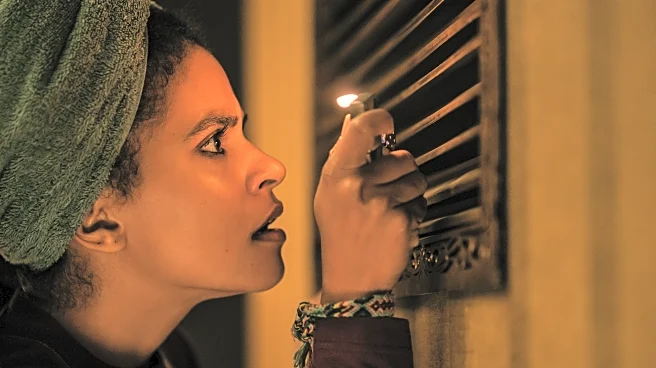
The film 'They Will Kill You', directed by Kirill Sokolov, features Zazie Beetz in a leading role. Set in a luxury Manhattan apartment building, the movie combines elements of action, horror, and comedy. The plot revolves around a Satan-worshipping cult
residing in the building, who engage in ritualistic killings of their staff. Zazie Beetz plays Asia, a maid who is secretly an avenger aiming to rescue her sister from the cult. The film is noted for its intense action sequences and gory special effects, drawing comparisons to other films like 'Ready or Not 2'. The narrative is driven by themes of class division, as the wealthy tenants are portrayed as sociopathic antagonists.
Why It's Important?
The film taps into contemporary social issues by highlighting the divide between the wealthy and the marginalized. It uses the horror-comedy genre to critique the excesses and moral corruption of the rich, making it relevant in discussions about social justice and inequality. The movie's release adds to the ongoing cultural conversation about wealth disparity, using entertainment as a medium to explore these themes. For audiences, it offers both a thrilling cinematic experience and a reflection on societal issues, potentially influencing public perception and dialogue around class dynamics.
What's Next?
As the film gains traction, it may spark discussions about the portrayal of wealth and power in media. The success of 'They Will Kill You' could lead to more films exploring similar themes, potentially influencing the direction of future projects in the action-horror genre. Additionally, the film's reception might impact the careers of its cast and crew, particularly Zazie Beetz, who could see increased demand for roles that blend action with social commentary.
Beyond the Headlines
The film's approach to storytelling, using exaggerated violence and dark humor, raises questions about the effectiveness of satire in addressing serious issues. It challenges viewers to consider the role of entertainment in social critique and whether such portrayals can lead to meaningful change. The film also contributes to the ongoing evolution of genre cinema, blending traditional horror elements with modern social narratives.