






What's Happening?
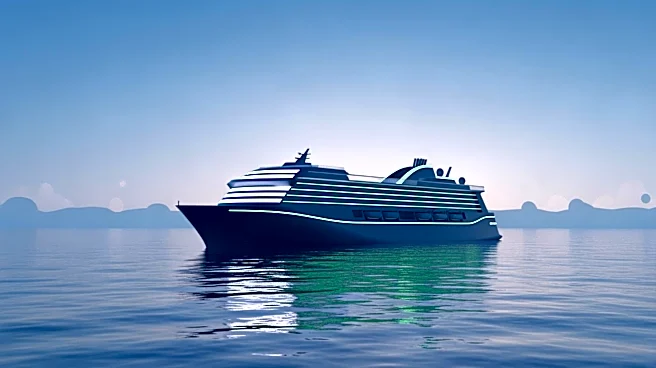
Meyer Werft, a German shipbuilder, has introduced Project Vision, the world's first fully battery-electric cruise ship. This innovative vessel is designed to cut emissions by up to 95%, marking a significant step towards sustainable maritime travel. The
ship, which debuted at the Seatrade Cruise Global conference in Miami, measures 902 feet and can carry up to 1,856 passengers. It is powered by Norwegian battery specialist Corvus Energy, utilizing existing maritime technology. The Vision is set to operate on European itineraries, with plans for charging infrastructure at major ports by 2030. The ship can also be configured as a hybrid for longer routes. This development comes as the cruise industry faces criticism for its environmental impact, with cruise liners known for high carbon dioxide emissions due to onboard amenities.
Why It's Important?
The introduction of a fully battery-electric cruise ship represents a pivotal moment in the cruise industry, which has been under scrutiny for its environmental footprint. By significantly reducing emissions, Project Vision could set a new standard for sustainable travel, potentially influencing other sectors to adopt similar technologies. This shift not only addresses environmental concerns but also offers a competitive edge in a market increasingly focused on sustainability. The move could lead to broader adoption of clean energy solutions in maritime travel, reducing the industry's reliance on fossil fuels and improving air quality in port cities.
What's Next?
As Project Vision progresses towards its operational debut by 2031, the focus will be on expanding charging infrastructure across European ports. This development is crucial for the ship's success and could encourage other ports worldwide to follow suit. The cruise industry may see increased pressure to adopt similar technologies, potentially leading to regulatory changes that mandate lower emissions. Stakeholders, including environmental groups and industry leaders, will likely monitor the project's impact closely, assessing its feasibility and scalability for broader application.
Beyond the Headlines
The launch of Project Vision could have far-reaching implications beyond immediate environmental benefits. It may drive innovation in ship design, emphasizing comfort and passenger experience by eliminating engine noise and vibration. Additionally, the project highlights the potential for collaboration between technology providers and traditional industries to achieve sustainability goals. This initiative could inspire similar efforts in other transportation sectors, contributing to a global shift towards cleaner energy solutions.