



What's Happening?
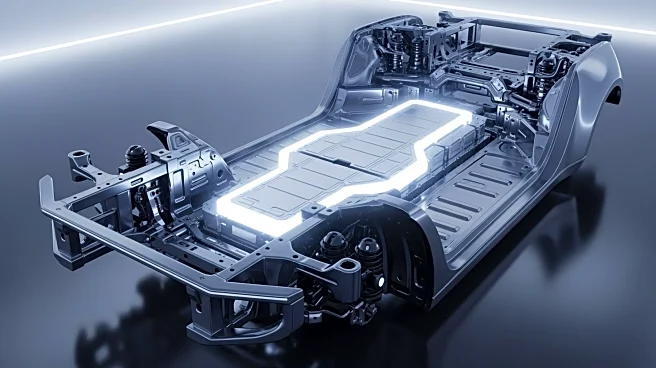
Toyota is exploring innovative ways to place batteries in electric vehicles (EVs) to allow for more diverse vehicle designs. According to recent patent filings, the company is considering moving powertrain components away from the traditional flat, skateboard battery design. This could involve placing components in a tunnel between the front seats or at the front or rear of the battery pack. Such a configuration would provide designers and engineers with greater flexibility, potentially enabling the development of EVs with more varied body styles. The patents, which were filed in the summer of 2025 and published in January 2026, suggest that this new arrangement could also improve interior space and handling by altering the vehicle's weight
distribution. Additionally, Toyota is working on a 'manual gear shift simulator' for EVs, which could enhance the driving experience by simulating traditional gear shifts.
Why It's Important?
This development is significant as it could lead to a broader range of EV models, including sedans and hatchbacks, which are currently less common in the EV market dominated by SUVs and crossovers. By offering more design flexibility, Toyota could appeal to a wider customer base and potentially increase its market share in the growing EV sector. The rearrangement of powertrain components could also improve vehicle efficiency and safety, as it may reduce the length of cables needed and optimize weight distribution. This innovation aligns with the automotive industry's ongoing efforts to enhance EV performance and consumer appeal, which is crucial as governments worldwide push for increased adoption of electric vehicles to meet environmental targets.
What's Next?
While the patents provide insight into Toyota's research and development efforts, it remains uncertain when or if these innovations will be implemented in production vehicles. The company has not commented on the patents, and as with many such filings, there is no guarantee that the technologies will be commercialized. However, if Toyota decides to move forward with these designs, it could lead to the introduction of new EV models with improved performance and design features. The automotive industry and consumers alike will be watching closely to see how Toyota's innovations might influence future EV offerings.