

What's Happening?
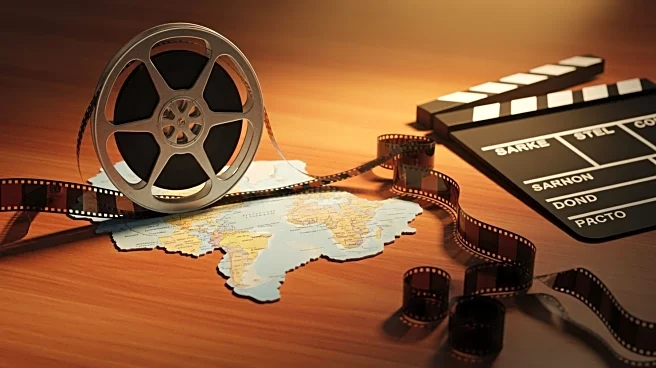
The portrayal of Iran in American films and pop culture has significantly influenced public perception over the decades. Starting with the 1991 film 'Not Without My Daughter,' which depicted Iran in a negative light, American audiences were introduced
to a simplistic and often villainous image of the country. This film, based on a real-life story, played into existing fears and stereotypes about Iran. Over time, however, the narrative began to shift. Films like 'House of Sand and Fog' and 'Persepolis' started to humanize Iranian characters and present more nuanced stories. The 2009 documentary 'No One Knows About Persian Cats' highlighted the underground music scene in Tehran, coinciding with the Iranian Green Movement protests. This gradual change in portrayal has been furthered by Iranian filmmakers like Asghar Farhadi and Jafar Panahi, whose works have gained international acclaim and contributed to a more complex understanding of Iran.
Why It's Important?
The evolution of Iran's portrayal in American media is significant as it reflects broader cultural and political shifts. Initially, films like 'Not Without My Daughter' reinforced negative stereotypes, which could influence public opinion and policy. However, as more nuanced stories emerged, they helped foster a deeper understanding of Iranian society and its struggles. This shift is crucial in a globalized world where media plays a powerful role in shaping perceptions and potentially influencing diplomatic relations. By presenting Iranian characters as complex individuals rather than one-dimensional villains, these films contribute to a more informed and empathetic view of Iran among American audiences.
What's Next?
As Iranian filmmakers continue to produce works that challenge stereotypes and offer authentic narratives, American audiences may become more receptive to diverse perspectives. This could lead to increased cultural exchange and understanding between the two nations. Additionally, as the political landscape in Iran evolves, future films may explore new themes and stories, further enriching the dialogue between Iran and the West. The continued success of Iranian cinema on the international stage may also encourage Hollywood to support and distribute more films that offer a balanced view of Iran.
Beyond the Headlines
The changing portrayal of Iran in American media highlights the ethical responsibility of filmmakers to present accurate and respectful representations of other cultures. It also underscores the power of cinema as a tool for social change, capable of challenging prejudices and fostering empathy. As audiences become more aware of the complexities of Iranian society, there may be a broader push for media that reflects the diversity and richness of global cultures. This shift could have long-term implications for how other countries and cultures are depicted in American media.