


What's Happening?
Tucker Carlson, the former Fox News host, was impersonated by comedian Jeremy Culhane on Saturday Night Live's Weekend Update segment. Culhane, who joined SNL in October 2025, mocked Carlson's distinctive laugh while reviewing Oscar-nominated movies.
The skit included a reference to the 1994 film Forrest Gump, with Culhane's Carlson character laughing at a scene where the protagonist is bullied. The segment also featured Culhane criticizing a Best Picture nominee, Sinners, as a reflection of 'leftist woke America.' The impersonation has gained significant attention online, with over 118,000 views on YouTube. Carlson's laugh has been a subject of public scrutiny before, notably when Democrat Ted Lieu described it as 'maniacal' in 2021.
Why It's Important?
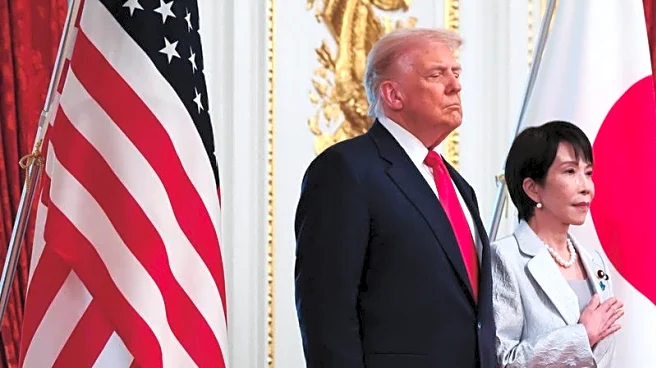
The SNL skit comes at a time when Tucker Carlson is under increased scrutiny due to his public disagreements with President Trump. Carlson's opposition to the Iran war led to his exclusion from the MAGA movement, with Trump stating that Carlson 'has lost his way.' This public rift highlights the ongoing tensions within conservative circles and the challenges faced by media figures who diverge from mainstream party lines. The SNL impersonation not only satirizes Carlson's media persona but also underscores the cultural and political divides that are often reflected in entertainment media. The skit’s popularity suggests a continued public interest in the dynamics between media personalities and political figures.
What's Next?
Tucker Carlson has not yet responded to the SNL impersonation. Given his history of addressing public critiques, a response could be forthcoming. The ongoing attention to his media persona and political stance may influence his future engagements and public appearances. Additionally, the skit may prompt further discussions about the role of satire in political discourse and its impact on public perceptions of media figures. As the political landscape continues to evolve, media portrayals like this one could play a significant role in shaping public opinion.