

What's Happening?
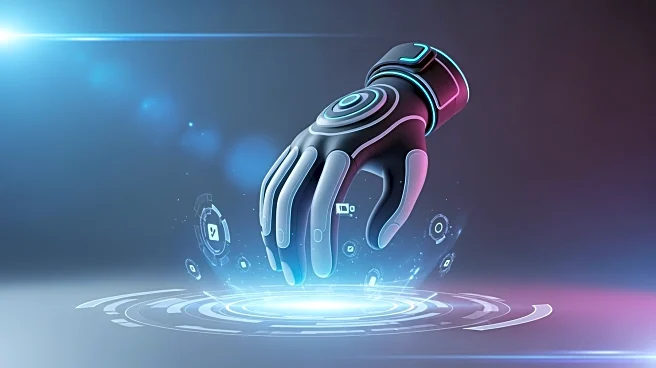
Owlchemy Labs, a leader in virtual reality (VR) game development, has introduced a new accessibility feature in their game Dimensional Double Shift. The latest update, version 1.9, incorporates a pinch-based artificial turning system that utilizes hand
tracking. Previously, players had to physically turn their bodies to change direction in the game. The new feature allows players to use a pinch gesture with their thumb and forefinger to turn left or right, making the game more accessible, especially for seated players. This update is part of Owlchemy Labs' ongoing commitment to enhancing accessibility in VR gaming. The game, available on Meta Quest, also offers additional downloadable content (DLC) for purchase.
Why It's Important?
The introduction of hand tracking for turning in Dimensional Double Shift represents a significant advancement in making VR gaming more accessible to a broader audience. By reducing the physical demands of gameplay, Owlchemy Labs is addressing the needs of players with limited mobility or those who prefer to play seated. This development could encourage more inclusive gaming experiences and potentially increase the adoption of VR technology among diverse user groups. Furthermore, it highlights the importance of accessibility in the gaming industry, setting a precedent for other developers to follow.
What's Next?
As Owlchemy Labs continues to innovate in VR accessibility, other developers may be inspired to implement similar features in their games. This could lead to a broader industry trend towards more inclusive gaming experiences. Additionally, as hand tracking technology evolves, further enhancements could be made to improve user interaction and comfort in VR environments. The success of these features may also influence hardware manufacturers to prioritize accessibility in future VR headset designs.
Beyond the Headlines
The integration of hand tracking in VR games like Dimensional Double Shift not only improves accessibility but also enhances the overall user experience by providing more intuitive and natural controls. This shift towards more user-friendly interfaces could drive greater consumer interest in VR technology, potentially expanding the market. Moreover, as accessibility becomes a standard consideration in game development, it may lead to a cultural shift in how games are designed, prioritizing inclusivity and user diversity.