




What's Happening?
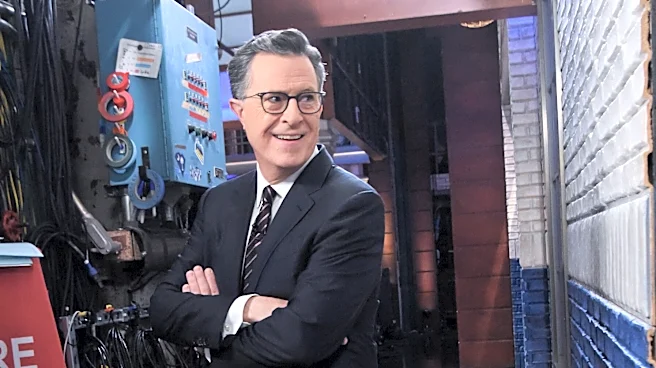
Stephen Colbert concluded his 11-year tenure on 'The Late Show' with a finale that became the most-watched weeknight episode in the show's history, drawing 6.74 million viewers. This surpassed the viewership of his debut episode in 2015, which had 6.55
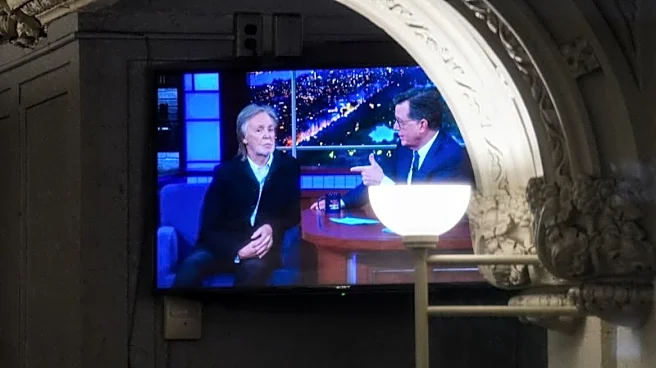
million viewers. The finale featured a performance with Paul McCartney, Elvis Costello, Louis Cato, and Jon Batiste. CBS decided to cancel the show last summer, citing financial pressures in the late-night TV landscape. Despite the cancellation, the finale was a significant event, with Colbert's rivals, Jimmy Kimmel and Jimmy Fallon, airing repeat episodes to avoid competing with the finale.
Why It's Important?
The conclusion of 'The Late Show with Stephen Colbert' marks a significant shift in the late-night television landscape. Colbert's show was known for its political commentary and had a substantial impact on public discourse. The cancellation reflects broader challenges in the late-night TV industry, where traditional viewership has declined due to the rise of digital platforms like YouTube and social media. The show's end could lead to a redistribution of its audience to other late-night hosts like Kimmel and Fallon, potentially altering the competitive dynamics in this segment of television.
What's Next?
CBS will replace 'The Late Show' with 'Comics Unleashed with Byron Allen,' a roundtable comedy talk show that avoids topical humor, allowing for episodes to be replayed later. This shift indicates a move away from the politically charged content that characterized Colbert's tenure. The new show's success will depend on its ability to attract a consistent audience in a fragmented media environment. Additionally, the time slot changes could impact the viewership dynamics for other late-night shows, as audiences adjust to the new programming.