







What's Happening?
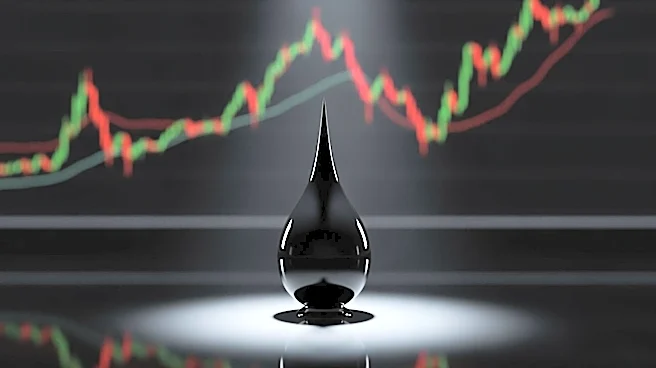
Neil Chapman, the senior vice president of ExxonMobil, has raised concerns about the global oil inventory levels, suggesting that they are nearing critically low points. This situation could lead to a significant spike in oil prices, potentially reaching
$150-160 per barrel in the coming weeks. The current price of oil is around $90 per barrel, but dwindling reserves and geopolitical tensions, particularly in the Strait of Hormuz, are contributing to the uncertainty. Chapman indicated that the next two to four weeks could be crucial in determining how low the inventory levels might drop. The potential for such a price increase is causing investors to consider hedging with energy stocks, with companies like Occidental Petroleum being highlighted as potential options.
Why It's Important?
The potential spike in oil prices to $150-160 per barrel could have widespread implications for the U.S. economy and global markets. Such an increase would likely lead to higher costs for transportation and manufacturing, impacting consumer prices and potentially contributing to inflation. Industries heavily reliant on oil, such as aviation and logistics, could face significant financial strain, leading to increased costs for goods and services. Additionally, the geopolitical tensions in the Strait of Hormuz, a critical chokepoint for global oil supply, add to the uncertainty and risk of further disruptions. Investors and businesses may need to prepare for increased volatility in the energy market, which could affect investment strategies and economic stability.
What's Next?
In the coming weeks, stakeholders will be closely monitoring the situation in the Strait of Hormuz and global oil inventory levels. Any developments in these areas could significantly impact oil prices and market stability. Companies and investors may need to adjust their strategies to mitigate risks associated with potential price spikes. Additionally, policymakers might consider measures to stabilize the market and address the economic impacts of rising oil prices. The situation remains fluid, and the actions of major oil-producing countries, such as those in OPEC+, could play a crucial role in determining the future trajectory of oil prices.